Author: Shaun P Kernahan

2019 NFL Mock Draft

1. Arizona Cardinals – Kyler Murray – QB – Oklahoma
2. San Francisco 49ers – Nick Bosa – DE – Ohio State
3. New York Jets – Quinnen Williams – DT – Alabama
4. Oakland Raiders – Drew Lock – QB – Missouri
5. Tampa Bay Buccaneers – Devin White – ILB – LSU
6. New York Giants – Dwayne Haskins – QB – Ohio State
7. Jacksonville Jaguars – T.J. Hockenson – TE – Iowa
8. Detroit Lions – Josh Allen – OLB – Kentucky
9. Buffalo Bills – Ed Oliver – DT – Houston
10. Denver Broncos – Devin Bush – ILB – Michigan
11. Cincinnati Bengals – Jonah Williams – OT – Alabama
12. Green Bay Packers – Noah Fant – TE – Iowa
13. Miami Dolphins – Christian Wilkins – DT – Clemson
14. Atlanta Falcons – Cody Ford – OT – Oklahoma
15. Washington Redskins – Chris Lindstrom – G – Boston College
16. Carolina Panthers – Jawaan Taylor – OT – Florida
17. New York Giants – Brian Burns – OLB/DE – Florida State
18. Minnesota Vikings – Erik McCoy – G/C – Texas A&M
19. Tennessee Titans – Rashan Gary – DE – Michigan
20. Pittsburgh Steelers – Greedy Williams – CB – LSU
21. Seattle Seahawks – Montez Sweat – DE – Mississippi State
22. Baltimore Ravens – Garrett Bradbury – G/C – NC State
23. Houston Texans – Josh Jacobs – RB – Alabama
24. Oakland Raiders – Hollywood Brown – WR – Oklahoma
25. Philadelphia Eagles – Darnell Savage Jr. – S – Maryland
26. Indianapolis Colts – Jeffery Simmons – DT – Mississippi State
27. Oakland Raiders – Clelin Ferrel – DE – Clemson
28. Los Angeles Chargers – Dexter Lawrence – DT – Clemson
29. Seattle Seahawks  – Byron Murphy – CB – Washington
30. Green Bay Packers – Johnathan Abram – S – Mississippi State
31. Los Angeles Rams – Andrew Dillard – OT – Washington State
32. New England Patriots – Daniel Jones – QB – Duke

The Problem with Analytics – An Opinion from a Former Skeptic

“Analytics is just a word… it’s a huge asset to have information and the ability to use it.” Rocco Baldelli, Minnesota Twins manager.

Well when you put it like that, it’s a wonder that we’re steaming in on 2019 and there’s still a large part of baseball’s fan contingent that is completely resistant to the concept of analytics in baseball. But look, I get it. I’m really only a recent convert to analytics, maybe in the last two or three years. And that’s not to say I have abandoned good old-fashioned observation and traditional statistics; only that I’m basically doing what Baldelli says above – availing myself of more information.

Members of the analytics-subscribing baseball fan community have lamented to me the lack of acceptance for analytics in baseball fandom’s mainstream. I hate to be the bearer of bad news, but to a certain degree, they never will be. On a television broadcast, it’s always going to be a battle to supplant batting average and home runs as the go-to stats when talking about a hitter’s ability. Let’s face it, the announcer has a few seconds to introduce the hitter and do a bit of color commentary before the guy steps into the batter’s box. Purely in terms of fitting what you need to fit into that brief window, it’s way easier to talk about a guy’s batting average or on base percentage than it is his wRC+ for the very simple fact that the first two don’t require an explanation.

Is wRC+ a better measuring stick for a player’s offensive value than batting average? Absolutely, and it’s not close. That said, on any given broadcast, what percentage of people know (or care for that matter) how wRC+ is calculated, and what it means for the probable outcomes of a player’s at bat? Add to that ongoing efforts to shorten the length of games, don’t hold your breath waiting for MLB to create windows in its game structure for the announcers to explain it.

That’s not to say, however, that analytics can’t gain a greater foothold in the baseball fan community. I, for one, would like to see this happen, but I am also realistic that there are some pretty big obstacles to overcome if this is going to happen. Fortunately, these obstacles are less complicated than the calculations for some of the metrics. Here they are:

The people: Since I started this article with a person (Baldelli), I might as well start here with one. Baldelli’s approach to it is the right one – the fan-friendly one. He’s basically saying that they’re trying to accumulate as much information as they can in order to put their players into the best positions to succeed. With every single pitch of every single game available in stunning high definition, there is more data out there than ever. If you have access to something that shows you Pitcher A has the most success throwing a certain pitch, but only uses that certain pitch 19% of the time, you have done exactly what Baldelli said.

However, this is not the approach analytics subscribers have taken with skeptics in my experience. God forbid you mention batting average or runs batted in to one of these folks. You might as well have walked into rural Mississippi with a “Vote Hillary” headband on. Yes, new metrics are definitely more reliable and exacting indicators of a player’s offensive performance, and a statistic like batting average which weighs singles and home runs equally is inherently flawed. Yes, runs batted in are heavily dependent on how well the hitters in front of a player get on base. No, you don’t have to be a pedantic ass when talking about it.

I suspect a lot of the condescending smugness is due to residual animosity the intellectual crowd still holds against the jocks from high school who treated them like crap, and being able to demonstrate their intellectual superiority in adulthood is in some way cathartic and blissfully revengeful. I mean, can’t you just take silent pleasure in knowing your paycheck is probably twice or three times what Meathead Malone now makes at the local Dick’s Sporting Goods?

This isn’t the Old West, and this town is in fact big enough for the both of you.

The metrics themselves: Yup. Even though a much more precise method of analysis takes place with the metrics, they often provide data that is at best confusing and at worst useless. Take WAR, or VAR. Each is used to determine how much better a certain player is than a proverbial “replacement” player. Sounds like a valuable tool, right? Sure, except that there are several sources of this metric, and rarely do they align with one another on a player. How are you to know which is reliable?

Take launch angle. Sure, there’s a sweet spot where the majority of home runs are hit (25 to 26 degrees), but that’s absolutely meaningless unless combined with sufficient exit velocity. I get the appeal when Giancarlo Stanton mashes one of his prodigious and majestic dongs into the stratosphere, but in 99% of batted balls, I can imagine exactly zero scenarios where anyone should care what the launch angle was. To be fair, there are hitters out there who say they looked at their average launch angles and decided to focus more on hitting the ball in the air, with impressively positive results, but they could likely have done the same by just acknowledging they hit too many weak grounders and correcting accordingly. Want a cool metric to use instead of launch angle? Hard hit percentage. How often does a guy square up a ball? Hint. The good hitters do it more frequently.

Take defensive metrics. Wow, what a dumpster fire. To be fair, defensive stats like Catch Probability have taken hold on television broadcasts, and while it’s hard to say with any degree of confidence that they’re accurate, it’s pretty damn exciting to watch someone like Kevin Pillar make an absurd play to take a triple away from a guy, and have the graph come up confirming he just made a play with a 3% Catch Probability. Still, the majority of defensive metrics…well, suck. Mike Trout can go from being a profoundly negative defender in center field, to Gold Glove caliber the next season. For much of the first half of 2018, the Rockies’ Nolan Arenado, probably one of the three or four best defenders at third base of the last 25 years, was rated as a negative defender. Manny Machado was metrically one of the worst defenders in baseball. Manny Machado!

Even when defensive metrics make sense on the surface, red flags abound. Take Matt Kemp, rated analytically as one of the worst outfield defenders in the history of history, behind only Old Four Toes McGillicutty of the Port Philbanks Plankwalkers from 1857 to 1861. And he had a peg leg. There were some dWAR corrections this year, but before that, defensive metrics would have you believe that Kemp would need to win the offensive triple crown to have any value. In fact, he could get the game winning hit in the ninth inning of ten straight games, and never have a single ball hit to him in left field, and still over the course of those ten games come out to be a negative player because his dWAR is so bad.

My advice? Stick to catch probability, and the infield equivalent. Route efficiency is another fun one, and since the geniuses behind it decided to put the function in the nomenclature, it doesn’t require explaining. And if you really want to have a good time looking up a player’s defensive ability, Fangraphs’ Inside Edge Fielding is a superb and fun resource. And in case you were wondering, yes, a player has indeed made a play rated as “impossible.” His name is Andrelton Simmons, and seeing as you can simply observe that he’s beyond incredible in the field, it passes the sniff test.

The false narratives: Whoa boy… this one is probably my favorite. With the rise of analytics, and the increased use of in-depth statistical probability, certain truths about baseball have come to light. For example, the sacrifice bunt has all but disappeared from the game except by pitchers. Why? Well, the numbers bear out that giving up an out to advance a runner is less likely to result in a run than letting the (non-pitcher) batter try to hit. Jay Bell had like a billion sacrifices from the two-hole one year for the Pirates or Diamondbacks… some inconsequential franchise anyway…(easy, guys, I’m kidding). And you know what? You’ll never see that again. Not only does it make you less likely to score, it cuts off at the knees your likelihood of scoring multiple runs in an inning. There is one exception. You are slightly more likely to score with runners on second and third with one out, than you are with runners on first and second and nobody out. This, of course, does not take into account who is hitting. It’s merely an aggregate calculation. Well, while the bunt has all but disappeared, the narrative has become among the aforementioned “people” that if you bunt, you’re an idiot. Is that really an attitude to take if you’re trying to get adopted by the mainstream? Also, and while I realize the bottom of the ninth inning in a tied game is a very specific instance, it’s one that happens frequently enough and it’s one in which only one run is needed to score. If you can use the bunt to ensure you have one of your better hitters coming up in a situation where only a fly ball is needed to win the game, why would you not at least consider that? I’m not talking about having Mookie Betts bunt to give Blake Swihart a chance to win the game. But if you reverse the names, doesn’t it make a little sense?

Here’s another example. Not too long ago, someone came up with this characterization of the three true outcomes player. Basically, a guy would either hit a home run, walk, or strike out most of the time. Adam Dunn would be the prototype. Another guy who would fit this model, at least until 2018 when he cut down on his strikeouts (and lo and behold, became a more valuable offensive player) is Joc Pederson. Yeah. Dunn was a very valuable hitter. Pederson can be too. But for every Dunn, there are dozens of Ryan Schimpfs. Out of this three true outcomes fad came the notion that strikeouts don’t matter because all outs are created equal. God forbid you suggest that a batter hit behind the runner when there’s a guy on second with nobody out. You might as well have suggested beef wellington to a vegan. Meanwhile, the Kansas City Royals went to two World Series, winning one, with an offensive philosophy of putting the ball in play. The two most recent World Series winners, Boston and Houston, both ranked among the teams who struck out the least in their winning seasons. It’s simple. A strike out, unless the catcher fails to hold the pitch, is always going to be an out. A batted ball has a round about 30% of becoming a hit. And this doesn’t even take into account having to make a fielder make a play. Because for every human vacuum cleaner like Andrelton Simmons, there’s a statue like Corey Seager who can barely range a foot to either side.  

Lastly, if I hear one more thing about spin rate, I might blow a fuse. Sure, if you want to know who throws a fastball that rises (even if there’s no such thing), or who throws one that sinks, you can look at spin rate. But honestly, if you’re trying to determine who is an effective pitcher, something like “out rate” will give you a better indication than spin rate.

I’ll leave it there while my blood pressure is still at manageable levels. Thank you for reading.

An Overdue Apology to Jared Goff

I owe Jared Goff an apology. Here’s why.

It’s more than just Goff turning out to be better than I (and to be fair, most football/Rams fans I know) expected. That happens frequently enough. I didn’t think Todd Gurley would be as incredible as he is. Sure, I knew he’d be good. We all did. I just didn’t think his explosion would ever get back to 100% after his college knee injury, thereby limiting his potential to merely good, rather than special and transcendent. It also happens enough that a guy I proclaim to be the messiah ends up out of football in three seasons. It happens. I was beyond convinced that Greg Robinson was going to be the next great Rams offensive tackle, carrying on the legacy of the great Jackie Slater and Orlando Pace. Whoa, did I swing and miss on that slider in the dirt.

But neither of these examples, nor any others I could provide, approach how badly I got Jared Goff wrong.

It started before the 2016 draft. The blockbuster trade with the Titans hadn’t gone down, and there certainly weren’t any rumors I was aware of. I was cautiously optimistic that the Rams were going to finally address a variety of glaring roster deficiencies that may finally set the team on a path to respectability in spite of Jeff Fisher’s brutal ineptness as a head coach. I was fine with Case Keenum at quarterback. You know, not long term, but he was fine. And when you have a guy who will do a mostly acceptable job on a team with far more pressing needs, why not take of those first? And then the trade announcement came on my morning commute.

I didn’t immediately lose hope. For a brief time, I held out some hope that they’d take Carson Wentz. Again, I didn’t think they needed a quarterback, but if they were going to take one, Wentz’s combination of athleticism and aptitude would have made him my choice in spite of never having faced elite college competition. It rapidly became apparent, however, that Goff was the organization’s target, and I couldn’t stop bitching about it.

Not that I thought Goff was awful; I didn’t. I just thought he was… decidedly average. Tall, skinny guy with a big arm. Fairly accurate, but also mostly immobile. Joe Flacco on a good day. Again, there’s nothing wrong with Flacco. He’s been a champion for Christ’s sake. But if you’re mortgaging your entire future to pick a guy, he should be better. Couple all of that with Goff not sounding all that bright in his interviews, I was ready to whole-heartedly assume the worst.

As an aside, something dawned on me in hindsight here. Jeff Fisher had one of the most simplistic, uninventive, and predictable offensive philosophies I have ever seen, so if a quarterback with limited brainpower was going to succeed, he’d do it a system like Fisher’s. Anyway, just wanted to get that in here before I forgot…

Back to the point, from the moment the Rams drafted Goff to the end of the 2016 season, my “I told you sos” were at a fever pitch. Waste of a top pick! Waste of all the great picks to acquire him! If a hack like me can see it, why can’t these idiots who get paid millions of dollars to work in football see it!?

Fast forward to 2018, crow has never tasted so good. I’ve gone from being Goff’s fiercest critic to his staunchest supporter, and that’s saying something considering the fact that some say he’s a dark horse MVP candidate. Now, when people say he’s just a “system quarterback,” I put them in their place. How does that happen? It’s mostly the fickleness of results, but there’s a lot that goes into it.

It’s not just the impossibly accurate throws, like the gorgeous touchdown dime to Cooper Kupp in the corner of the end zone against the Vikings. It’s not just the pocket presence, and progression reading before firing bullets into the zone’s soft spots. It’s not just the almost instantaneous grasp of Sean McVay’s intricate offensive blueprint. While all those things have something to do with it, there’s an offensive swagger that we haven’t seen since Kurt Warner and the Greatest Show on Turf. You know you can take 35 points to the bank every week. It doesn’t matter whether that’s in the comforts of home, or the unfriendly confines of hostile venues like Seattle. No, it won’t always be enough, as evidenced by the week 9 loss to New Orleans, led by its own brilliant quarterback. But it’s there, and he’s the general.

No, he’s not perfect. His internal clock still needs work, as evidenced by some of the coverage sacks he takes. He still makes the occasional head scratching pass, like the one that floated between the numbers of San Francisco’s Jaquiski Tartt, who somehow contrived to drop it. He seems to sometimes have trouble with the play clock, leading to unnecessary timeouts wasted.

And yes, having an offensive line that can actually block helps. Having a head coach whose football acumen exceeds that of your average toddler helps. Talented receiving corps? Check. Superstar running back? Double check. But none of it moves without the engine, and that’s your 24-year-old franchise quarterback. And in the next year or two, you might very possibly be adding “Super Bowl winning” to that description.

So there you have it. I’m sorry, Jared. I was wrong about you.

USL Title Game: Louisville City vs. Phoenix Rising

Courtesy: Aaron Whelan

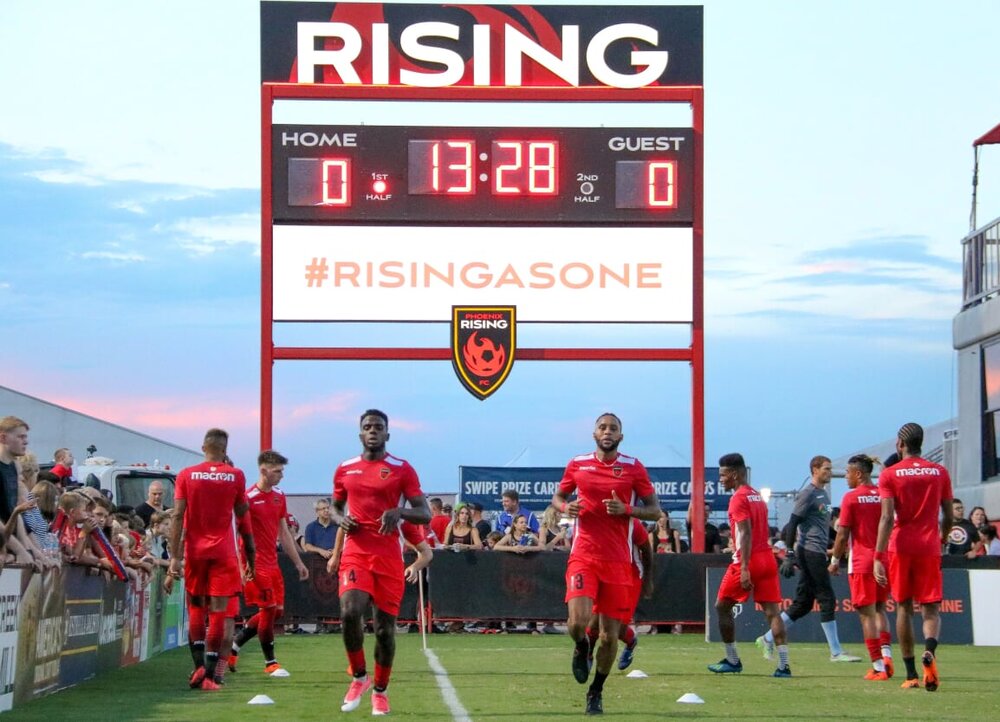
The sun may be setting on the 2018 USL season and an international superstar’s career, but there is one more match to be played on the United States second tier soccer calendar. Thursday night on ESPN 2, Louisville City FC will play host to Phoenix rising in the USL title game, this one held at Lynn Stadium at the University of Louisville rather than Louisville City FC’s traditional home field of Louisville Slugger Field.

History will be made as Louisville City is looking to become the USL’s first ever back-to-back champion while Phoenix Rising is looking to become the first road side to ever lift the USL Cup. The soccer world will certainly recognize one name on the pitch, as Ivory Coast international Didier Drogba makes his final appearance of his career. He comes into the match tied for the most goals in the playoffs, 3, with Michael Seaton of Orange County SC (the club Phoenix Rising beat to get to the title game) and Brian Ownby of Louisville.

Courtesy: Aaron Whelan

During the regular season, Cameron Lancaster of Louisville ran away with the scoring title, scoring 25 goals while the two closest to him had 20. Chris Cortez led Phoenix rising with 17 goals this season. In net, Carl Woszczynski of Phoenix Rising finished tied for third in the league with 12 clean sheets, while Louisville City keeper Greg Ranijtsingh finished one behind with 11.

If you an MLS fan looking to see names you may recognize, Louisville City has 21-year old Jonathan Lewis on loan from New York City FC where he scored three goals in 25 appearances in 2017. Phoenix Rising features six players on loan from an MLS club, including a trio of Los Angeles FC youngsters, although none of the three made much of an impact this season.

The match will be televised on ESPN2 at 8 PM EST and will be worth the watch for many reasons, but historically to see Drogba play the final match of his career.

Serena Williams’ US Open Penalties Were Not Sexist

I cringe every time I see another celebrity post about the supposedly appalling sexist discrimination Serena Williams faced at the U.S. Open. The bottom line is, she reacted petulantly to adversity, and the umpire was well within his rights to not just penalize her a game, but send her packing altogether. Now, it’s a good thing he didn’t. The outrage over the perceived discrimination towards Serena already puts an undeserved asterisk next to Naomi Osaka’s first Grand Slam title. Osaka played better, and deserved to win. 

Serena Williams isn’t just the best women’s tennis player in history, she’s the most dominant athlete in history. No iconic athlete has ever run roughshod over their competition the way Serena has, both comprehensively and for anywhere near as long. Not Tiger Woods in his prime. Not Michael Jordan. Not anyone. The only person I can think of that eviscerated their competition with anywhere close to the level of ruthlessness is Mike Tyson, and he only did it for a handful of years. Serena has done it for two decades. Like it or not, when you’re a living and active legend, you are under a microscope. Everything you do becomes headline news. Everything you stand for? That’s headline news too. Any time your veneer cracks and you show a moment of weakness? The vultures circle and descend. 

I sure hope nobody takes this article as that; taking an opportunity to be unnecessarily critical of someone who rarely gives the haters a window. It’s the opposite, in fact. You’d be hard-pressed to find a bigger Serena Williams fan than me. I am in constant admiration of her on-court dominance, off-court grace, perpetual class, you name it. Let her actions when members of the crowd, in a stunning display of assholery began to boo Osaka, serve as a shining example of why. 

I was also pretty pissed when they decided to ban her from wearing her iconic black outfit at Roland Garros. THAT was sexist, and probably a few other things too. 

But penalizing her on-court behavior at the U.S. Open? No. In fact, NOT penalizing her would have been sexist. In tennis, as well as all sports, male athletes are rebuked for their in-competition behavior at a rate that exponentially exceeds women. This is 99% because male athletes are generally churlish adolescents who lack the impulse control to behave in any way other than spoiled rich kids, but still, the point stands. In order for something to be sexist, it has to be applied (or not applied) to someone on the basis of their gender. And in tennis, you can’t smash your racket, and you can’t verbally abuse the chair umpire. Just ask John McEnroe, Goran Ivanisevic, Jeff Tarango, Nick Kyrgios, and any number of men who have done it. Just because women have the emotional maturity to not throw toddler-like tantrums when something on the court doesn’t go their way doesn’t mean they get a pass when they slip up. 

Yes, I’m sure you can find a video of Roger Federer losing his trademark composure and dropping a few f-bombs in the direction of a chair umpire, and not getting punished for it. I’ve seen it. Should he have gotten warned? Probably. Had he already smashed his racket and received illegal coaching in the play leading up to his tantrum? Doubtful, so let’s stop it with the non-sequitur comparisons.

Sexism, in sport and and life, is a real problem. It’s shocking and more than a little depressing that in 2018, we still haven’t societally addressed and eliminated it sufficiently. In an evolved society, sexism should be vanishingly rare. But it isn’t, and part of the problem is the peanut gallery’s inclination to floodlight every perceived sleight as sexism, racism, or whatever category of discrimination you want to apply. When we do this, we dull the piercing blade of the spotlight on actual acts of discrimination, turning it into the butterknife that is the floodlight. 

Stop it.  

NHL Mock Draft

1. Buffalo – Rasmus Dahlin, D, Frolunda HC
2. Carolina – Andrei Svechnikov, RW, Barrie Colts
3. Montreal – Filiop Zadina, LW, Halifax Mooseheads
4. Ottawa – Adam Boqvist, D, Brynas J20
5. Arizona – Brady Tkachuk, LW, Boston Univ.
6. Detroit – Oliver Walstrom, RW, US U18
7. Vancouver – Quinn Hughes, D, Michigan
8. Chicago – Evan Bouchard, D, London Knights
9. NY Rangers – Ty Smith, D, Spokane Chiefs
10. Edmonton – Noah Dobson, D, Acadie-Bathurst Titan
11. NY Islanders – Jesperi Kotkaniemi, C, Assat
12. NY Islanders – Joe Veleno, C, Drummondville Voltiguers
13. Dallas – Barrett Hayton, C, Sault Ste Marie Greyhounds
14. Philadelphia – Joel Farabee, LW, US U18
15. Florida – Bode Wilde, D, US U18
16. Colorado – Rasmus Kupair, C, Karpat
17. New Jersey – Rasmus Sandin, D, Sault Ste Marie Greyhounds
18. Columbus – K’Andre Miller, D, US U18
19. Philadelphia – Vltali Kravstov, RY, Traktor Chelyabinsk
20. Los Angeles – Isac Lundestrom, C, Lulea HF
21. San Jose – Martin Kaut, RW, Dynamo Pardubice
22. Ottawa – Dominik Bokk, RW, Vaxjo Lakers
23. Anaheim – Serron Noel, RW, Oshawa Generals
24. Minnesota – Akil Thomas, C, Niagra IceDogs
25. Toronto – Jared McIsaac, D, Halifax Mooseheads
26. NY Rangers – Ryan McLeod, C, Mississauga Steelheads
27. Chicago – Grigori Denisenko, LW, Loko Yaroslavl
28. NY Rangers – Alexander Alexeyev, D, Red Deer Rebels
29. St. Louis – Ty Dellandrea, C, Flint Firebirds
30. Detroit – Benoit-Olivier Grouix, C, Halifax Mooseheads
31. Washington – Nicolas Beaudin, D, Drummondville Voltigeurs

NBA Mock Draft

Pick Team Player Position  School/Country
1 Phoenix Suns DeAndre Ayton C Arizona
2 Sacramento Kings Jaren Jackson Jr. F/C Michigan State
3 Atlanta Hawks Marvin Bagley III F/C Duke
4 Memphis Grizzlies Luka Doncic G Slovenia
5 Dallas Mavericks Mohamed Bamba F/C Texas
6 Orlando Magic Wendall Carter Jr. F/C Duke
7 Chicago Bulls Michael Porter Jr.  F  Missouri
8 Cleveland Cavalier Trae Young G Oklahoma
9 New York Knicks Kevin Knox F Kentucky
10 Philadelphia 76ers Mikal Bridges F Villanova
11 Charlotte Hornets Lonnie Walker IV G Miami
12 Los Angeles Clippers Collin Sexton G Alabama
13 Los Angeles Clippers Miles Bridges F Michigan State
14 Denver Nuggets Shai Gilgeous-Alexander G Kentucky
15 Washington Wizards Robert Williams F/C Texas A&M
16 Phoenix Suns Aaron Holiday G UCLA
17 Milwaukee Bucks Kevin Heurter G Maryland
18 San Antonio Spurs Zhaire Smith G/F Texas Tech
19 Atlanta Hawks Mitchell Robinson C High School
20 Minnesota Timberwolves Donte DiVencenzo G Villanova
21 Utah Jazz Troy Brown G/F Oregon
22 Chicago Bulls Brandon McCoy C UNLV
23 Indiana Pacers De’Anthony Melton G USC
24 Portland Trail Blazers Chandler Hutchinson F Boise State
25 Los Angeles Lakers Grayson Allen G Duke
26 Philadelphia 76ers Dzanan Musa F Bosnia
27 Boston Celtics Anfernee Simmons G IMG Academy
28 Golden State Warriors Bruce Brown  G Miami
29 Brooklyn Nets Jalen Brunson G Villanova
30 Atlanta Hawks Gary Trent G Duke
Pick Team Player Position  School/Country
1 Phoenix Suns DeAndre Ayton C Arizona
2 Sacramento Kings Jaren Jackson Jr. F/C Michigan State
3 Atlanta Hawks Marvin Bagley III F/C Duke
4 Memphis Grizzlies Luka Doncic G Slovenia
5 Dallas Mavericks Mohamed Bamba F/C Texas
6 Orlando Magic Wendall Carter Jr. F/C Duke
7 Chicago Bulls Michael Porter Jr.  F  Missouri
8 Cleveland Cavalier Trae Young G Oklahoma
9 New York Knicks Kevin Knox F Kentucky
10 Philadelphia 76ers Mikal Bridges F Villanova
11 Charlotte Hornets Lonnie Walker IV G Miami
12 Los Angeles Clippers Collin Sexton G Alabama
13 Los Angeles Clippers Miles Bridges F Michigan State
14 Denver Nuggets Shai Gilgeous-Alexander G Kentucky
15 Washington Wizards Robert Williams F/C Texas A&M
16 Phoenix Suns Aaron Holiday G UCLA
17 Milwaukee Bucks Kevin Heurter G Maryland
18 San Antonio Spurs Zhaire Smith G/F Texas Tech
19 Atlanta Hawks Mitchell Robinson C High School
20 Minnesota Timberwolves Donte DiVencenzo G Villanova
21 Utah Jazz Troy Brown G/F Oregon
22 Chicago Bulls Brandon McCoy C UNLV
23 Indiana Pacers De’Anthony Melton G USC
24 Portland Trail Blazers Chandler Hutchinson F Boise State
25 Los Angeles Lakers Grayson Allen G Duke
26 Philadelphia 76ers Dzanan Musa F Bosnia
27 Boston Celtics Anfernee Simmons G IMG Academy
28 Golden State Warriors Bruce Brown  G Miami
29 Brooklyn Nets Jalen Brunson G Villanova
30 Atlanta Hawks Gary Trent G Duke

Should MLB Suspend Players Who Get Ejected After Being Removed From the Game?

Let’s talk about a hypothetical situation. You’re a Major League Baseball pitcher, and you’re on the hill. The home plate umpire has been, at least in your eyes, squeezing you all game long. Either that, or he’s Angel Hernandez and nobody really knows what the hell he’s doing. You’re battling and struggling, but keeping your team in the game, all the while keeping your mounting anger at the plate ump’s perceived slights at bay. Then it happens. The manager comes out to get you. You’ve reached your pitch limit, or maybe got into a jam, and you hand him the ball. You can say whatever you want now, right? Oh sure, you might get run, but who cares? You’re not on the hill again for another five or six days. 

Umpires have a pretty tough job. Some verbal abuse from players and coaches, and a lot of it from fans, is part and parcel of the deal, but MLB benefits when everybody gets along for the most part. These umps range in ability and performance from outstanding to appalling, and everything in between. I’d also bet Pete Rose a substantial sum of money that at least a few of them have a serious gambling problem — for what other explanation can there be for their consistent mind-bogglingly poor performances? They also tend to have fairly short memories, so by the time a pitcher who berated a particular umpire gets around to that same umpire calling balls and strikes again, he’ll have been hollered at by so many other players that it’s a non-issue.

But does that make it right? 

Just in the past few days, Chris Sale and Madison Bumgarner were tossed out of games they were departing anyway. Sale is purported to have called the plate umpire…uh…one who does un-biblical acts with his maternal parent, while Bumgarner… let’s just say I have a tough time writing about him without bringing my personal feelings into it so you can read about his ejection here. And in a few days, both ace pitchers will take the hill for their respective teams again.


World Cup Predictions

The USA is not in the World Cup that begins the day after we find out the USA will host the World Cup in 2026. It has been hard to get revved up for the next month of soccer without the USA, Italy, Netherlands and Ghana competing, but that doesn’t mean it isn’t going to be a fun watch. I looked through the groups and break down who I think will get out of each group and who will win the cup.

Group A: Russia, Saudi Arabia, Egypt, & Uruguay

I have Uruguay winning the group behind the easiest footballer to hate, Luis Suarez, but they have plenty of talent in Edison Cavani, Diego Godin, Maximiliano Pereira and more. They are a solid team but nothing special as you will see in the knockout rounds. Russia actually has a good shot to win the group behind big Russian names that aren’t well known to casual soccer fans. Alexandr Golovin is a special young talent at CSKA Moscow, while the Miranchuk twins from Lokomotiv will really open eyes at this year’s tournament.  Egypt will finish third behind star Mohamed Salah, while Saudi Arabia will struggle to secure a point.

Group B: Portugal, Spain, Morocco, & Iran

This one is very top heavy, but I have Portugal tabbed to win the group. Behind Christiano Ronaldo, you have the likes of Bernardo Silva, Bruno Alves, Pepe, and more. They simply have more talent and are a better team than runner ups Spain, who I don’t see having the scoring to make it deep into the tournament, but good enough to get out of the group and possibly one more match but not go on a run. I see Morocco finishing third with Iran struggling to get a point, much like the other team from the Middle East.

Group C: France, Australia, Peru, & Denmark

France might have as much talent as any team in the tournament, and should cruise through the group. There is so much talent in fact, Karim Benzama, Anthony Martial, Adrien Rabiot, and Aymeric Laporte will all be watching the tournament from home. The second team from the group may very well be determined on Friday when Peru and Denmark face off. I see Denmark knocking off Peru behind the star Christian Eriksen and a plethora of forwards they have on the squad. That leaves Australia last in the group, but I know I will tune in to see Tim Cahill in likely his last World Cup.

Group D: Argentina, Iceland, Croatia, & Nigeria

There is not a traditional “Group of Death” this year, but this may be as close as it gets. Argentina features arguably the best player in the world. Iceland is coming off a fantastic showing in the Euros two years ago that made them the darlings of the soccer world. There might not be a better midfield duo in the tournament than Luka Modric and Ivan Rakitic for Croatia, and Nigeria features vets Victor Moses and Mikel John Obi. In the end I see Argentina finishing first while Croatia is a very strong second.

Group E: Brazil, Switzerland, Costa Rica, & Serbia

Brazil has been a quiet team heading into the World Cup for the first time ever, but I still see them coasting through a solid group. Serbia has the veteran leadership to escape as the number two team, just ahead of Costa Rica followed closely by Switzerland.

Group F: Germany, Mexico, Sweden, & South Korea

This is another really interesting group that will have Americans unsure of how to root. Do you pull for rival Mexico to represent the CONCACAF or do you root for them to face an early exit. Germany is easily the best team in the group and will run away with it, while I do see Mexico just holding off Sweden with South Korea coming in last.

Group G: Belgium, Panama, Tunisia, & England

If France is the most talented team in the tournament, Belgium is 1B. They may actually be able to roll out Youri Tielemans and Adnan Januzaj as subs, which is a nice luxury for head man Roberto Martinez. England has a special group of players that may make them a threat in Qatar in four years, but they definitely have enough to finish second in this group. I see Tunisia having a good showing and actually finishing third in the group, ahead of Panama.

Group H: Poland, Senegal, Colombia, & Japan

This might end up being the least interesting group of all, but there is some sneaky talent here. Robert Lewandowski is still an elite goal scorer and will carry the club to a win in the group. Senegal is solid but will finish last in the group. The Colombia vs. Japan game on Tuesday will be more important than some expect. With a new coach at the helm, veteran stars Shinji Kagawa, Keisuke Honda, and Shinji Okazaki are seeing more time on the pitch for Japan. That said, I think Colombia has just enough to finish second in the group over Japan.

Round of 16:

Spain over Uruguay
Portugal over Russia
France over Croatia
Argentina over Denmark
Brazil over Mexico
Germany over Serbia
Belgium over Colombia
England over Poland

The best match here will be France and Croatia, as Croatia has the team to push France to the brink, but France just has too much talent. If it is Spain against Russia rather than Portugal, I could see the hosts advancing to the quarters.

Quarter Finals

France over Spain
Portugal over Argentina
Belgium over Brazil
Germany over England

This would make for an incredible Quarter Finals to watch. France has incredible talent knocking off an undermanned Spain club. The two best players in the world face off yet again in Portugal and Argentina. Belgium’s talent is just too much for the always dangerous Brazil club. German and England face off in a rivalry that is always fantastic.

Semi Finals

Belgium over France
Germany over Portugal

The two most talented teams face off with Belgium coming out on top, while the best team overall in Germany knocks off arguably the best player in the world.

Third Place Game

France over Portugal

This is typically the least interesting match in the tournament, and there is a real chance Ronaldo doesn’t even play in it, but France will get the chance to show their depth and take third.

Final

Belgium over Germany

In a final that will have people worldwide really confused by the far too similar flags, it is talent that wins out over team play. I see Belgium lifting the cup in a final that could be epic.

The DoD Warrior Games

When we started this site years ago, without expectations of where it would take us, I never could have dreamed of the opportunities it would present for us. Since we started I have covered events put on by the NFL stocked full of Hall of Famers, covered every level of baseball from elite High School to the MLB and in over a dozen ballparks. I have been in the press box and locker rooms of the NHL and will be on the pitch of multiple USL teams along with covering pro rugby, rodeo, and lacrosse coming in the near future. This is not meant as a pat on the back, but instead to create perspective as to what I am about to share. Saturday I had the privilege of covering the most awe inspiring sporting event I have ever experienced, the DoD Warrior Games.

From 2010 to 2014 the Warrior Games were exclusively in Colorado Springs as it was put on by the US Olympic Committee in partnership with the DoD (Department of Defense). In 2015, the DoD took over the games and began moving it to new locations each year, always hosted by a branch of the military. The Marines hosted in 2015 in Quantico, followed by a trip to West Point hosted by the Army in 2016 and the Navy welcomed the Warrior Games to Chicago in 2017. In 2018 the games returned to their roots and took place at the Air Force Academy in Colorado Springs.

There were athletes representing eight “teams” at the 2018 games, with those being the Army, Navy, Marines, Air Force, SOCOM (Special Operations Command), United Kingdom Armed Forces, Australian Defence System, and the Canadian Armed Forces. They competed in 11 Paralympic style events over nine days with gold, silver, and bronze medals handed out for each event. The events featured wounded, ill, and injured service members who enrolled with their service’s wounded warrior programs and then qualifying for the games. The featured events are archery, cycling, time trial cycling, field, indoor rowing, powerlifting, shooting, sitting volleyball (a great watch, look it up), swimming, track, and wheelchair basketball.

On the grounds they held exhibits to show able bodies and non-abled alike what it is like to participate in adaptive sports and that people of all physical conditions can compete and play together.

I was at the Bronze Medal Game between the Navy and Marines and Gold Medal game between the Army and host Air Force. The Navy beat the Marines rather handily to take home bronze, while the Army took home the gold over Air Force.

In the end, the results didn’t matter (although you couldn’t tell based on the incredible competitiveness on display on the court) but it was the conversations had with these athletes and support that could be seen that was truly incredible. There were dozens of emotional support and service dogs in the building that assist many of the athletes with PTSD and other mental health struggles. Also in attendance were combat canines who are suffering from PTSD themselves.

This is Tisha Knickerbocker’s dog and a couple of Tisha, a Marine. She was a small scrappy point guard who was quick all over the court and not afraid to mix it up and get physical when needed. In the event’s program it lists her injuries as PTSD, Traumatic Brain Injury, Spinal Cord Injury, and Loss of motion in left ankle. In the event you were wondering, there is plenty of chairs that collide, people flip over (as you can see as it is Tisha’s chair flipped over below) and the collisions are loud. You get a whole new appreciation for these people as athletes when sitting just feet away from the basket and seeing the effort put in.

Cassidy Busch was hit by the force of an explosion that blew out her entire lower back, but she found normalcy again in sport where she not only competed in wheelchair basketball, but also cycling, field, and swimming.

Alan Thomas’ injuries weren’t disclosed, but he is missing his right leg below the knee. That didn’t stop him from competing in basketball along with powerlifting, sitting volleyball, and track.


Kristen Morris represented the Air Force in wheelchair basketball on Saturday, but also participated in cycling, field, sitting volleyball, swimming, and track. Her injuries? Left and right hip reconstruction and a total right hip replacement.

These were just some of the incredible athletes I had the honor of meeting on this day. Many others competed, which represents only a fraction of those currently rehabbing. Do yourself a favor, if you are near a city that will be hosting the Warrior Games, go. If you are unable to experience this first hand, donate to one of the many charities that help our service men and women injured in the line of duty, or simply shake the hand of a vet to thank them for their service. Sports has a unique ability to bring people of all backgrounds and beliefs together. It was an incredible experience to see those who gave so much to allow us that freedom use sports to regain normalcy in their ever-changed lives.