Author: Shaun P Kernahan

A look at the NBA Trade Deadline

The NBA trade deadline has come and gone, and it was a busy one. The Golden State Warriors have gone from perennial NBA Finals favorites to battling for the number one pick in the draft, and they just improved their future by trading away the biggest name at the deadline. D’Angelo Russell is headed to the Minnesota Timberwolves where he will join fellow young phenom Karl-Anthony Towns to create two stars of their own to build around. Meanwhile the Warriors got an extra 2021 first round pick and the under-performing Andrew Wiggins who, with a fully healthy Warriors team, could actually fit in pretty well.

The Timberwolves were a third team really just watching in another big time deal that has many calling the Miami Heat a legit threat in the East after adding Andre Iguodala along with Solomon Hill and Jae Crowder. The Memphis Grizzlies took the often suspended Dion Waiters off Miami’s hands while also adding big man Gorgui Dieng and quality swing Justice Winslow. The Timberwolves added James Johnson, but that isn’t going to be a memorable piece of the deal.  

The Warriors did not end their dealings with the big trade with Minnesota, they sent Alec Burks and Glenn Robinson III for a trio of second round picks.

The Los Angeles Clippers beat out the cross town Lakers to get Marcus Morris, while also adding Isaiah Thomas, by sending of Moe Harkless and a couple picks.

In the head scratcher of the week, Clint Capela seemingly hurt the Rockets chances of contending after he was sent to the Atlanta Hawks along with Nene and they received Robert Covington and Jordan Bell in the deal, who was then sent along to Memphis for Bruno Caboclo. The Timberwolves landed Malik Beasley, Juan Hernangomez, Evan Turner, Jarred Vanderbilt, and a first rounder while the Nuggets added Gerald Green, Noah Vonley, Keita Bates-Diop, a first rounder, and Shabazz Napier, who was subsequently flipped.

The trade that may have come as the biggest surprise as it was not between contenders was the Cleveland Cavaliers got big man Andre Drummond for just John Henson, Brandon Knight, and a second round pick.

Finally, the Hawks parted with Alex Len and Jabari Parker (another highly touted but underperforming player) to reunite with Dewayne Dedmon and a couple of second rounders.

Overall, the contenders were rather quiet, but ther lower level clubs this season were quite active in setting themselves up for the future.

Kobe’s Helicopter Crash Hits Too Close to Home

It has been a handful of days since the shocking news of Kobe Bryant’s death and I have wrestled with how to respond in writing. I don’t like doing articles filled with “I” or “me” but this is a unique circumstance. The crash happend just miles from where I once lived and the destination was the city I used to live in. 

As a kid, Michael Jordan was the icon of the NBA my early basketball memories were the Paxson three in the corner and the push off against Utah to secure the title. Then there was this young kid passing the ball between his legs to win the dunk contest for my hometown Los Angeles Lakers. That kid was Kobe Bryant and just a few years later, during my freshman year of high school, Kobe and Shaq won their first NBA title with the Lakers. It was an era that was just about impossible to head to the store without passing multiple cars that featured Lakers flags that were attached to their window. So my teenage years of basketball fandom were dominated by Kobe Bryant and the loss of him was a loss of a piece of my childhood.

Then, we learned his daughter, and two other 13 year old girls, were also on board. As a parent now, this news hit me in a different kind of way. I immediately flashed my thoughts to Vanessa Bryant and the incredible pain she must be feeling having just lost her spouse and child, two things I don’t even want to contemplate having to experience.

Then the other names were released and one stood out to me, John Altobelli. Initially I was unsure why the name stood out but I knew I recognized it. Soon after I was on Twitter and it hit me via multiple people I follow and personally know shared their experienced with Alto, he was the baseball coach at Orange Coast College. In my time working in the baseball world, l became familiar with the man even though I never met him myself. I have met his son JJ while he was a scout for the Boston Red Sox, I have spoken and interviewed numerous ballplayers who played for him during his time as a manage in the Cape Cod League, and there is also the kid I coached who went on to become a coach at the University of Oregon, where JJ Altobelli currently coaches as well.

On Tuesday, on a night the Clippers-Lakers game was postponed in the wake of the tragedy, there was a baseball game down in Orange County. The Orange Coast Pirates took the field to open their baseball season, and they did so in front of a packed house, without their manager. I don’t know the score of the game, frankly it is irrelevant, but they began the healing process. John’s brother, and SID at Orange Coast College, told the kids to “do the best you can, that’s all you can do. Clear your heads, play baseball the way my brother would have wanted you to play.”

Why it’s OK Derek Jeter Didn’t get 100%

Derek Jeter getting into the Hall of Fame with all but one vote has sparked plenty of debate. There are many reasons for him to have gotten 100%, but I think him falling shy of unanimous is actually the correct result.

Let’s start with the arguments for being the second ever unanimous member of Cooperstown. The simple fact Mariano Rivera earned 100% of the votes a season ago has eliminated the argument of those who have come before not receiving 100% as an argument. Babe Ruth should have been 100%, but you can no longer not vote for someone on that argument. There is also no questioning Jeter’s Hall of Fame resume, so he should land on all the ballots on that argument alone.

Now, for the reasons the one voter who did not vote for him got it right. The argument since the results were announced has been Jeter is easily a top four shortstop of all-time. A top four guy at his position, not top four player all-time, so should a guy you can’t really argue was the best at his own position get 100%, I argue no. On that, he wasn’t the best player of his time, never winning an MVP, and you can argue he wasn’t the best at his position at any point of his career. Cal Ripken Jr. was better than Jeter early on, and Alex Rodriguez was already in the big leagues when Jeter debuted, and he was the better player most of, if not their entire careers.

Now, there has often been an argument to spread out votes to players who need a boost or to keep them on the ballot an extra year, but the ballot was rather weak this season so that isn’t a valid argument. Another issue with the vote is the fact it is a secret ballot. Baseball writers vote for the Hall of fame, yet their names and ballots are not made public. Those who are tasked with writing the story of baseball literally vote for the stories, yet they are not made to make their opinions public. This needs to change and that may make it more common to see 100% vote getters, or at least make those who don’t vote for a guy like Jeter explain themselves. The writer who did not vote for Jeter has a quality argument for not voting, but the fans of the game do deserve an explication.

Dodgers’ Offseason Inactivity is Puzzling

The message appeared to have gotten through to Andrew Friedman. In 2017, after falling one game short of a World Series title, Friedman did little to improve the Dodgers’ roster, figuring correctly that the team was well enough constructed to make another run. In 2018, after getting resoundingly thumped by a vastly superior Red Sox team, Friedman once again effectively sat out the sweepstakes for Manny Machado and Bryce Harper, making only an absurdly transparent token offer to Harper, electing instead to make targeted incremental upgrades through Joe Kelly and AJ Pollock. Both seemed astute signings on the surface, but Kelly turned out to be inconsistent, and Pollock, who seems like he was born on the injured list, once again struggled with injuries and saw his center field defense alarmingly crater. Oh, and the team didn’t make it past the NLDS, getting eliminated by the eventual world champion Nationals and their built-for-a-short-series three-headed-monster rotation. 

Yes, heading into the defining offseason of his Dodger tenure and one of the more wildly exciting free agency periods in recent memory in terms of who was available, he seemed to have gotten the message. The team could really use a star or two to push them back into World Series contention. And those stars were out there to be gotten. Friedman himself, who rarely answers any type of question related to the team with anything other than non-committal and vague generalities, said the team had as many as 12 “elite” players they were targeting this Winter. So far, only Blake Treinen has joined ranks. And Treinen, while possessing absolutely malevolent stuff, is a reclamation project who was non-tendered by the A’s. 

The big three free agents are obviously off the market, and only Gerrit Cole was even made an offer. Other potentially interesting names like Josh Donaldson remain available, but the team has shown little to no interest. If a truly “elite” performer is going to be added, at this point it will have to be through trade. The rumor mill, which is rarely to be believed, has churned out names like Francisco Lindor and Mike Clevinger of the Indians, or Mookie Betts and David Price of the Red Sox, but nothing has materialized. The alleged holdup is Friedman’s reticence to include prized prospect Gavin Lux in any deal, but again, requisite grains of salt are prescribed here. 

Matters get even more complicated. Fan favorite and Cy Young finalist Hyun Jin Ryu signed with the Blue Jays, so now not only is the roster not improved, it’s inarguably worse. 

It’s barely 2020, and lots can still happen. Then again, nothing could also happen. And if nothing does, people are going to have some questions. 

The Dodgers’ Corey Seager Problem

In the wake of the Dodgers’ surprising and devastating (if you’re a Dodgers’ fan) loss to the Nationals in Game 5 of the NLDS, there was an understandable amount of vitriol thrown at Dave Roberts and Clayton Kershaw. This was especially present in the Dodger blogosphere, which in their defense, has a readership they have to cater to in order to stay relevant. 

I don’t want to spend a ton of time on that. Suffice it to say this. If you loved Dave Roberts for the last few seasons, you loved him in spite of his blithering ineptness at in game management, ESPECIALLY when it comes to the bullpen. If you’ve loved Clayton Kershaw because of the fact that he’s the best regular season pitcher of this generation and it’s not close, you loved him despite is propensity to choke in the postseason. Even that isn’t entirely fair to say. He HAS had some good postseason starts, and a couple of dynamite relief appearances. His overall resume in the postseason, however, is merely mediocre. Which when you compare it to the unapproached brilliance of his regular season career is probably why people misapply the choker label to him. 

They both crapped the bed in Game 5. They both deserve to remain employed. (Yes, I’m a hypocrite. Yes, I have called for Roberts’ firing in the past, but even after his most egregious display of in game ineptness, I have come around to his other qualities, and accepted the fact that all other available managers out there are worse.)

Here is the real problem. His name is Corey Seager. I know. I know. I DO know. We all love him. He’s cute. He chews bubble gum. He’s loaded with offensive talent. But he’s a massive problem. I know this is an unpopular opinion, but it’s the unfortunate truth. 

People love Seager because of his virtually perfect left-handed swing that results in a billion doubles every season. They love his boyish good looks, and his “aw shucks” charm, and his honest-to-goodness 100% dedication to being a great player. They love all the same things about him that I do. Here’s the problem.

In the postseason, he sucks. If that’s not enough to make you hate me, there’s more. In the entire history of baseball, he’s one of the worst postseason players. In 131 career postseason plate appearances, he has an OPS of .605. That’s atrocious. The argument can be made that a 131 plate appearance sample size is not indicative of a player’s ability, but at 25 years of age, Seager has already had more postseason plate appearances than the overwhelming majority of players in baseball history. I was going to say 99%, but didn’t have the desire to do the research and calculations. Still, I’d venture to say I’m not far off. 

BUT WAIT, some of you might say! He was a Gold Glove finalist and defensive metrics grade him out as being above average so at least there is that! Matt Kemp was once a Gold Glove finalist. Adrian Gonzalez, possibly the worst fielding first baseman of all time, won four Gold Gloves. The people that vote on these things are at best clueless, and at worst braindead. 

And then you have defensive metrics. And before you dismiss me as a “Get off my lawn,” type, I’m not. I wholeheartedly believe in analytics and availing yourself of all data out there when it comes to making a decision. But defensive metrics? Whoo boy… Amazingly, they still take into consideration where infield coaches position the player. Yes, you read that right. Because the Dodgers dedicate a ton of resources into data acquisition, and apply it to their coaching, Seager is rated a high quality defensive shortstop. Sure, they get some of the evaluations right. Andrelton Simmons? Amazing. Matt Chapman? Like Brooks Robinson and Ozzie Smith had a son. Nolan Arenado? Barely above average. What the f***? Admittedly, that’s cherry picking but it’s only one example out of many. You can do your own Googling if you want, and find plenty of your own “wtf” cases of players’ defensive values. 

At the end of the day, Seager is a tree stump on defense who generally catches what is hit to him. (Here is  a link to his Fangraphs Inside Edge Fielding page if you want to bother) You can absolutely deal with it if he hits, which during the regular season he generally does when he’s healthy. In the postseason, he doesn’t. He’s had more plate appearances in the postseason than approximately 99% of players who have ever played the game, and has some of the worst numbers of any player in postseason history. 

For a player whose value is tied nearly exlusively to his offensive production, due to his utter haplessness on defense, that isn’t good. 

Unfortunately, it gets worse. Seager earned $4 million in 2019 to provide barely league average production. One can fairly argue that after missing a season with injury, it would be fair to cut him some slack. If that is the argument, it can also be fairly pointed out that the Dodgers made the World Series in 2018 without him, nearly won it in 2017 thanks far more to Charlie Culberson than him, and got eliminated in the first possible round in 2019 WITH him. 

Before long, Seager is going to get a contract that pays him in the neighborhood of $25 million a season. Yes, he is cute. Yes, he chews bubble gum. Yes, he tries his damned best. Yes, we all love him. But for a team that continually wants to cut payroll despite having virtually unlimited financial resources at its disposal, can you justify spending that kind of money on one of the worst postseason players in the entire history of the sport?

The Dodgers have a Corey Seager problem. They have MANY problems. But they have a Corey Seager problem, and it’s serious. 

Predicting the NFL Season

AFC

North

WLT

Div

Steelers

12-4

4-2

Ravens

10-6

4-2

Browns

10-6

3-3

Bengals

3-13

1-5


South

WLT

Div

Texans

10-6

4-2

Jaguars

8-8

3-3

Titans

7-9

3-3

Colts

7-9

2-4


East

WLT

Div

Patriots

12-4

6-0

Dolphins

6-10

3-3

Bills

4-12

2-4

Jets

2-14

1-5


West

WLT

Div

Chiefs

12-4

5-1

Chargers

12-4

4-2

Raiders

5-11

2-4

Broncos

5-11

1-5


    NFC

North

WLT

Div

Packers

12-4

3-3

Vikings

10-6

4-2

Bears

10-6

4-2

Lions

3-13

1-5


South

WLT

Div

Falcons

12-4

4-2

Saints

12-4

4-2

Panthers

11-5

4-2

Buccaneers

5-11

0-6


East

WLT

Div

Eagles

11-5

5-1

Cowboys

10-6

5-1

Redskins

3-13

1-5

Giants

2-14

1-5


West

WLT

Div

Rams

14-2

5-1

Seahawks

9-7

4-2

49ers

5-11

2-4

Cardinals

2-14

1-5


Super Bowl: Chiefs over Rams

2019 NFL Mock Draft

1. Arizona Cardinals – Kyler Murray – QB – Oklahoma
2. San Francisco 49ers – Nick Bosa – DE – Ohio State
3. New York Jets – Quinnen Williams – DT – Alabama
4. Oakland Raiders – Drew Lock – QB – Missouri
5. Tampa Bay Buccaneers – Devin White – ILB – LSU
6. New York Giants – Dwayne Haskins – QB – Ohio State
7. Jacksonville Jaguars – T.J. Hockenson – TE – Iowa
8. Detroit Lions – Josh Allen – OLB – Kentucky
9. Buffalo Bills – Ed Oliver – DT – Houston
10. Denver Broncos – Devin Bush – ILB – Michigan
11. Cincinnati Bengals – Jonah Williams – OT – Alabama
12. Green Bay Packers – Noah Fant – TE – Iowa
13. Miami Dolphins – Christian Wilkins – DT – Clemson
14. Atlanta Falcons – Cody Ford – OT – Oklahoma
15. Washington Redskins – Chris Lindstrom – G – Boston College
16. Carolina Panthers – Jawaan Taylor – OT – Florida
17. New York Giants – Brian Burns – OLB/DE – Florida State
18. Minnesota Vikings – Erik McCoy – G/C – Texas A&M
19. Tennessee Titans – Rashan Gary – DE – Michigan
20. Pittsburgh Steelers – Greedy Williams – CB – LSU
21. Seattle Seahawks – Montez Sweat – DE – Mississippi State
22. Baltimore Ravens – Garrett Bradbury – G/C – NC State
23. Houston Texans – Josh Jacobs – RB – Alabama
24. Oakland Raiders – Hollywood Brown – WR – Oklahoma
25. Philadelphia Eagles – Darnell Savage Jr. – S – Maryland
26. Indianapolis Colts – Jeffery Simmons – DT – Mississippi State
27. Oakland Raiders – Clelin Ferrel – DE – Clemson
28. Los Angeles Chargers – Dexter Lawrence – DT – Clemson
29. Seattle Seahawks  – Byron Murphy – CB – Washington
30. Green Bay Packers – Johnathan Abram – S – Mississippi State
31. Los Angeles Rams – Andrew Dillard – OT – Washington State
32. New England Patriots – Daniel Jones – QB – Duke

The Problem with Analytics – An Opinion from a Former Skeptic

“Analytics is just a word… it’s a huge asset to have information and the ability to use it.” Rocco Baldelli, Minnesota Twins manager.

Well when you put it like that, it’s a wonder that we’re steaming in on 2019 and there’s still a large part of baseball’s fan contingent that is completely resistant to the concept of analytics in baseball. But look, I get it. I’m really only a recent convert to analytics, maybe in the last two or three years. And that’s not to say I have abandoned good old-fashioned observation and traditional statistics; only that I’m basically doing what Baldelli says above – availing myself of more information.

Members of the analytics-subscribing baseball fan community have lamented to me the lack of acceptance for analytics in baseball fandom’s mainstream. I hate to be the bearer of bad news, but to a certain degree, they never will be. On a television broadcast, it’s always going to be a battle to supplant batting average and home runs as the go-to stats when talking about a hitter’s ability. Let’s face it, the announcer has a few seconds to introduce the hitter and do a bit of color commentary before the guy steps into the batter’s box. Purely in terms of fitting what you need to fit into that brief window, it’s way easier to talk about a guy’s batting average or on base percentage than it is his wRC+ for the very simple fact that the first two don’t require an explanation.

Is wRC+ a better measuring stick for a player’s offensive value than batting average? Absolutely, and it’s not close. That said, on any given broadcast, what percentage of people know (or care for that matter) how wRC+ is calculated, and what it means for the probable outcomes of a player’s at bat? Add to that ongoing efforts to shorten the length of games, don’t hold your breath waiting for MLB to create windows in its game structure for the announcers to explain it.

That’s not to say, however, that analytics can’t gain a greater foothold in the baseball fan community. I, for one, would like to see this happen, but I am also realistic that there are some pretty big obstacles to overcome if this is going to happen. Fortunately, these obstacles are less complicated than the calculations for some of the metrics. Here they are:

The people: Since I started this article with a person (Baldelli), I might as well start here with one. Baldelli’s approach to it is the right one – the fan-friendly one. He’s basically saying that they’re trying to accumulate as much information as they can in order to put their players into the best positions to succeed. With every single pitch of every single game available in stunning high definition, there is more data out there than ever. If you have access to something that shows you Pitcher A has the most success throwing a certain pitch, but only uses that certain pitch 19% of the time, you have done exactly what Baldelli said.

However, this is not the approach analytics subscribers have taken with skeptics in my experience. God forbid you mention batting average or runs batted in to one of these folks. You might as well have walked into rural Mississippi with a “Vote Hillary” headband on. Yes, new metrics are definitely more reliable and exacting indicators of a player’s offensive performance, and a statistic like batting average which weighs singles and home runs equally is inherently flawed. Yes, runs batted in are heavily dependent on how well the hitters in front of a player get on base. No, you don’t have to be a pedantic ass when talking about it.

I suspect a lot of the condescending smugness is due to residual animosity the intellectual crowd still holds against the jocks from high school who treated them like crap, and being able to demonstrate their intellectual superiority in adulthood is in some way cathartic and blissfully revengeful. I mean, can’t you just take silent pleasure in knowing your paycheck is probably twice or three times what Meathead Malone now makes at the local Dick’s Sporting Goods?

This isn’t the Old West, and this town is in fact big enough for the both of you.

The metrics themselves: Yup. Even though a much more precise method of analysis takes place with the metrics, they often provide data that is at best confusing and at worst useless. Take WAR, or VAR. Each is used to determine how much better a certain player is than a proverbial “replacement” player. Sounds like a valuable tool, right? Sure, except that there are several sources of this metric, and rarely do they align with one another on a player. How are you to know which is reliable?

Take launch angle. Sure, there’s a sweet spot where the majority of home runs are hit (25 to 26 degrees), but that’s absolutely meaningless unless combined with sufficient exit velocity. I get the appeal when Giancarlo Stanton mashes one of his prodigious and majestic dongs into the stratosphere, but in 99% of batted balls, I can imagine exactly zero scenarios where anyone should care what the launch angle was. To be fair, there are hitters out there who say they looked at their average launch angles and decided to focus more on hitting the ball in the air, with impressively positive results, but they could likely have done the same by just acknowledging they hit too many weak grounders and correcting accordingly. Want a cool metric to use instead of launch angle? Hard hit percentage. How often does a guy square up a ball? Hint. The good hitters do it more frequently.

Take defensive metrics. Wow, what a dumpster fire. To be fair, defensive stats like Catch Probability have taken hold on television broadcasts, and while it’s hard to say with any degree of confidence that they’re accurate, it’s pretty damn exciting to watch someone like Kevin Pillar make an absurd play to take a triple away from a guy, and have the graph come up confirming he just made a play with a 3% Catch Probability. Still, the majority of defensive metrics…well, suck. Mike Trout can go from being a profoundly negative defender in center field, to Gold Glove caliber the next season. For much of the first half of 2018, the Rockies’ Nolan Arenado, probably one of the three or four best defenders at third base of the last 25 years, was rated as a negative defender. Manny Machado was metrically one of the worst defenders in baseball. Manny Machado!

Even when defensive metrics make sense on the surface, red flags abound. Take Matt Kemp, rated analytically as one of the worst outfield defenders in the history of history, behind only Old Four Toes McGillicutty of the Port Philbanks Plankwalkers from 1857 to 1861. And he had a peg leg. There were some dWAR corrections this year, but before that, defensive metrics would have you believe that Kemp would need to win the offensive triple crown to have any value. In fact, he could get the game winning hit in the ninth inning of ten straight games, and never have a single ball hit to him in left field, and still over the course of those ten games come out to be a negative player because his dWAR is so bad.

My advice? Stick to catch probability, and the infield equivalent. Route efficiency is another fun one, and since the geniuses behind it decided to put the function in the nomenclature, it doesn’t require explaining. And if you really want to have a good time looking up a player’s defensive ability, Fangraphs’ Inside Edge Fielding is a superb and fun resource. And in case you were wondering, yes, a player has indeed made a play rated as “impossible.” His name is Andrelton Simmons, and seeing as you can simply observe that he’s beyond incredible in the field, it passes the sniff test.

The false narratives: Whoa boy… this one is probably my favorite. With the rise of analytics, and the increased use of in-depth statistical probability, certain truths about baseball have come to light. For example, the sacrifice bunt has all but disappeared from the game except by pitchers. Why? Well, the numbers bear out that giving up an out to advance a runner is less likely to result in a run than letting the (non-pitcher) batter try to hit. Jay Bell had like a billion sacrifices from the two-hole one year for the Pirates or Diamondbacks… some inconsequential franchise anyway…(easy, guys, I’m kidding). And you know what? You’ll never see that again. Not only does it make you less likely to score, it cuts off at the knees your likelihood of scoring multiple runs in an inning. There is one exception. You are slightly more likely to score with runners on second and third with one out, than you are with runners on first and second and nobody out. This, of course, does not take into account who is hitting. It’s merely an aggregate calculation. Well, while the bunt has all but disappeared, the narrative has become among the aforementioned “people” that if you bunt, you’re an idiot. Is that really an attitude to take if you’re trying to get adopted by the mainstream? Also, and while I realize the bottom of the ninth inning in a tied game is a very specific instance, it’s one that happens frequently enough and it’s one in which only one run is needed to score. If you can use the bunt to ensure you have one of your better hitters coming up in a situation where only a fly ball is needed to win the game, why would you not at least consider that? I’m not talking about having Mookie Betts bunt to give Blake Swihart a chance to win the game. But if you reverse the names, doesn’t it make a little sense?

Here’s another example. Not too long ago, someone came up with this characterization of the three true outcomes player. Basically, a guy would either hit a home run, walk, or strike out most of the time. Adam Dunn would be the prototype. Another guy who would fit this model, at least until 2018 when he cut down on his strikeouts (and lo and behold, became a more valuable offensive player) is Joc Pederson. Yeah. Dunn was a very valuable hitter. Pederson can be too. But for every Dunn, there are dozens of Ryan Schimpfs. Out of this three true outcomes fad came the notion that strikeouts don’t matter because all outs are created equal. God forbid you suggest that a batter hit behind the runner when there’s a guy on second with nobody out. You might as well have suggested beef wellington to a vegan. Meanwhile, the Kansas City Royals went to two World Series, winning one, with an offensive philosophy of putting the ball in play. The two most recent World Series winners, Boston and Houston, both ranked among the teams who struck out the least in their winning seasons. It’s simple. A strike out, unless the catcher fails to hold the pitch, is always going to be an out. A batted ball has a round about 30% of becoming a hit. And this doesn’t even take into account having to make a fielder make a play. Because for every human vacuum cleaner like Andrelton Simmons, there’s a statue like Corey Seager who can barely range a foot to either side.  

Lastly, if I hear one more thing about spin rate, I might blow a fuse. Sure, if you want to know who throws a fastball that rises (even if there’s no such thing), or who throws one that sinks, you can look at spin rate. But honestly, if you’re trying to determine who is an effective pitcher, something like “out rate” will give you a better indication than spin rate.

I’ll leave it there while my blood pressure is still at manageable levels. Thank you for reading.

An Overdue Apology to Jared Goff

I owe Jared Goff an apology. Here’s why.

It’s more than just Goff turning out to be better than I (and to be fair, most football/Rams fans I know) expected. That happens frequently enough. I didn’t think Todd Gurley would be as incredible as he is. Sure, I knew he’d be good. We all did. I just didn’t think his explosion would ever get back to 100% after his college knee injury, thereby limiting his potential to merely good, rather than special and transcendent. It also happens enough that a guy I proclaim to be the messiah ends up out of football in three seasons. It happens. I was beyond convinced that Greg Robinson was going to be the next great Rams offensive tackle, carrying on the legacy of the great Jackie Slater and Orlando Pace. Whoa, did I swing and miss on that slider in the dirt.

But neither of these examples, nor any others I could provide, approach how badly I got Jared Goff wrong.

It started before the 2016 draft. The blockbuster trade with the Titans hadn’t gone down, and there certainly weren’t any rumors I was aware of. I was cautiously optimistic that the Rams were going to finally address a variety of glaring roster deficiencies that may finally set the team on a path to respectability in spite of Jeff Fisher’s brutal ineptness as a head coach. I was fine with Case Keenum at quarterback. You know, not long term, but he was fine. And when you have a guy who will do a mostly acceptable job on a team with far more pressing needs, why not take of those first? And then the trade announcement came on my morning commute.

I didn’t immediately lose hope. For a brief time, I held out some hope that they’d take Carson Wentz. Again, I didn’t think they needed a quarterback, but if they were going to take one, Wentz’s combination of athleticism and aptitude would have made him my choice in spite of never having faced elite college competition. It rapidly became apparent, however, that Goff was the organization’s target, and I couldn’t stop bitching about it.

Not that I thought Goff was awful; I didn’t. I just thought he was… decidedly average. Tall, skinny guy with a big arm. Fairly accurate, but also mostly immobile. Joe Flacco on a good day. Again, there’s nothing wrong with Flacco. He’s been a champion for Christ’s sake. But if you’re mortgaging your entire future to pick a guy, he should be better. Couple all of that with Goff not sounding all that bright in his interviews, I was ready to whole-heartedly assume the worst.

As an aside, something dawned on me in hindsight here. Jeff Fisher had one of the most simplistic, uninventive, and predictable offensive philosophies I have ever seen, so if a quarterback with limited brainpower was going to succeed, he’d do it a system like Fisher’s. Anyway, just wanted to get that in here before I forgot…

Back to the point, from the moment the Rams drafted Goff to the end of the 2016 season, my “I told you sos” were at a fever pitch. Waste of a top pick! Waste of all the great picks to acquire him! If a hack like me can see it, why can’t these idiots who get paid millions of dollars to work in football see it!?

Fast forward to 2018, crow has never tasted so good. I’ve gone from being Goff’s fiercest critic to his staunchest supporter, and that’s saying something considering the fact that some say he’s a dark horse MVP candidate. Now, when people say he’s just a “system quarterback,” I put them in their place. How does that happen? It’s mostly the fickleness of results, but there’s a lot that goes into it.

It’s not just the impossibly accurate throws, like the gorgeous touchdown dime to Cooper Kupp in the corner of the end zone against the Vikings. It’s not just the pocket presence, and progression reading before firing bullets into the zone’s soft spots. It’s not just the almost instantaneous grasp of Sean McVay’s intricate offensive blueprint. While all those things have something to do with it, there’s an offensive swagger that we haven’t seen since Kurt Warner and the Greatest Show on Turf. You know you can take 35 points to the bank every week. It doesn’t matter whether that’s in the comforts of home, or the unfriendly confines of hostile venues like Seattle. No, it won’t always be enough, as evidenced by the week 9 loss to New Orleans, led by its own brilliant quarterback. But it’s there, and he’s the general.

No, he’s not perfect. His internal clock still needs work, as evidenced by some of the coverage sacks he takes. He still makes the occasional head scratching pass, like the one that floated between the numbers of San Francisco’s Jaquiski Tartt, who somehow contrived to drop it. He seems to sometimes have trouble with the play clock, leading to unnecessary timeouts wasted.

And yes, having an offensive line that can actually block helps. Having a head coach whose football acumen exceeds that of your average toddler helps. Talented receiving corps? Check. Superstar running back? Double check. But none of it moves without the engine, and that’s your 24-year-old franchise quarterback. And in the next year or two, you might very possibly be adding “Super Bowl winning” to that description.

So there you have it. I’m sorry, Jared. I was wrong about you.

USL Title Game: Louisville City vs. Phoenix Rising

Courtesy: Aaron Whelan

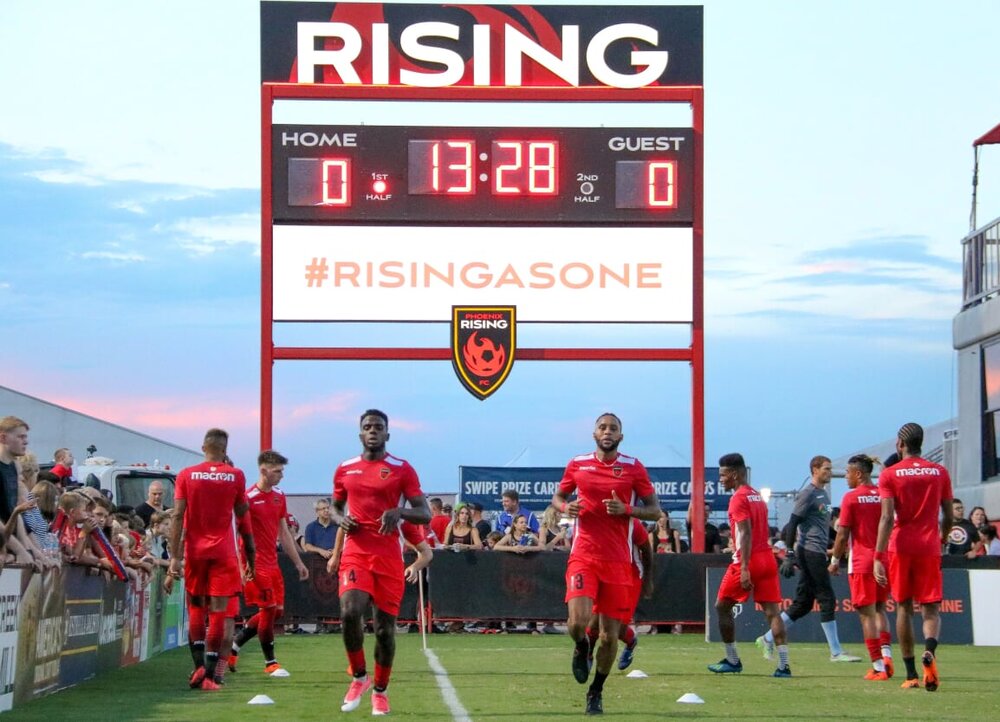
The sun may be setting on the 2018 USL season and an international superstar’s career, but there is one more match to be played on the United States second tier soccer calendar. Thursday night on ESPN 2, Louisville City FC will play host to Phoenix rising in the USL title game, this one held at Lynn Stadium at the University of Louisville rather than Louisville City FC’s traditional home field of Louisville Slugger Field.

History will be made as Louisville City is looking to become the USL’s first ever back-to-back champion while Phoenix Rising is looking to become the first road side to ever lift the USL Cup. The soccer world will certainly recognize one name on the pitch, as Ivory Coast international Didier Drogba makes his final appearance of his career. He comes into the match tied for the most goals in the playoffs, 3, with Michael Seaton of Orange County SC (the club Phoenix Rising beat to get to the title game) and Brian Ownby of Louisville.

Courtesy: Aaron Whelan

During the regular season, Cameron Lancaster of Louisville ran away with the scoring title, scoring 25 goals while the two closest to him had 20. Chris Cortez led Phoenix rising with 17 goals this season. In net, Carl Woszczynski of Phoenix Rising finished tied for third in the league with 12 clean sheets, while Louisville City keeper Greg Ranijtsingh finished one behind with 11.

If you an MLS fan looking to see names you may recognize, Louisville City has 21-year old Jonathan Lewis on loan from New York City FC where he scored three goals in 25 appearances in 2017. Phoenix Rising features six players on loan from an MLS club, including a trio of Los Angeles FC youngsters, although none of the three made much of an impact this season.

The match will be televised on ESPN2 at 8 PM EST and will be worth the watch for many reasons, but historically to see Drogba play the final match of his career.