

No basketball this weekend, so here are a couple
hockey lineups to win you some money to spend while filling your free time.
No basketball this weekend, so here are a couple
hockey lineups to win you some money to spend while filling your free time.
Over the weekend, Elisha Sam of Notts County scored one of the more unbelievable goals you will ever see as they took on Oxford City in the FA Trophy Quarter Final. Notts is currently in the fifth tier of English football, and the goal is a favorite for the 2021 FIFA Puskas Award.
The Puskas Award has been awarded every year since 2009 and it goes to the “most beautiful” goal of the year. Ten goals are nominated each year, so I scrubbed them all and put together a list of all the nominees from non-top tier competitions. Many are World Cup goals, but are of the U-age variety, so those don’t count as senior goals, therefore not top tier. Here are the eight I found:
Lionus Hallenius with a ridiculous volley for Hammarby IF against Syrianska FC in the second-tier of Sweden’s football in 2010, the Supperettan.
Julio Gomez bicycle kick for Mexico vs. Germany in the 2011 FIFA U-17 World Cup
Olivia Jimenez from distance for Mexico against Switzerland in the 2012 FIFA U-20 Women’s World Cup
2015’s Puskas award winner is this spinning bicycle kick off an impressive volley for Wendell Lira and Goianesia against Atletico Goianiense in 2015.
David Ball finds the corner from distance for Fleetwood Town against Preston North End in the 2014-15 League One season.
Daniuska Rodriguez of Venezuela breaks multiple Colombian ankles before tucking one in the corner for this goal in the 2016 South American U-17 Women’s Championship.
Denya Catellanos wastes absolutely no time at all putting a ball in the net for Venezuela against Cameroon in the 2016 FIFA U-17 Women’s World Cup in Jordan.
Jordi Mboula makes multiple Borussia Dortmund defenders look foolish as he scores for Barcelona in the 2016-17 UEFA Youth League.
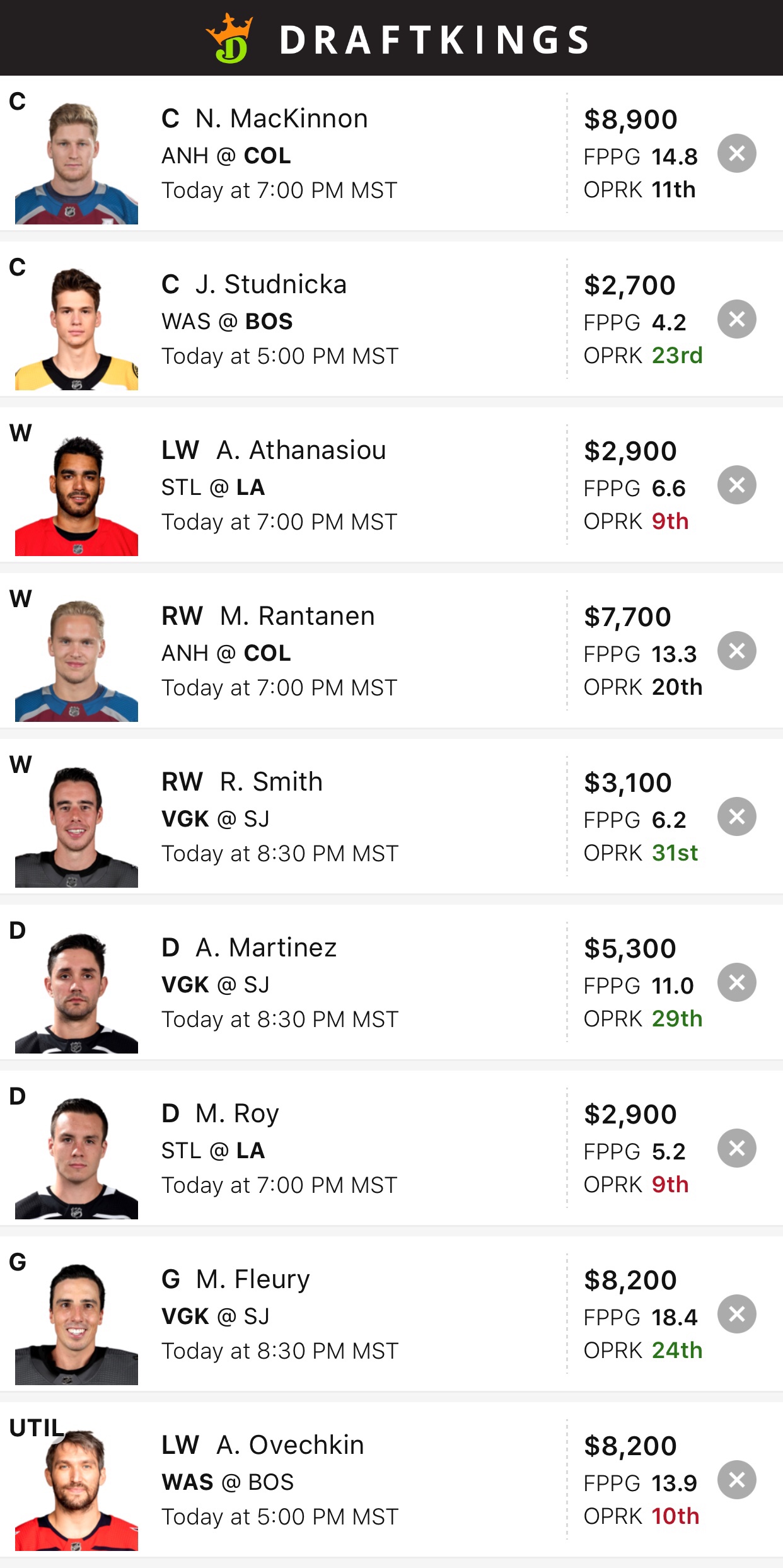
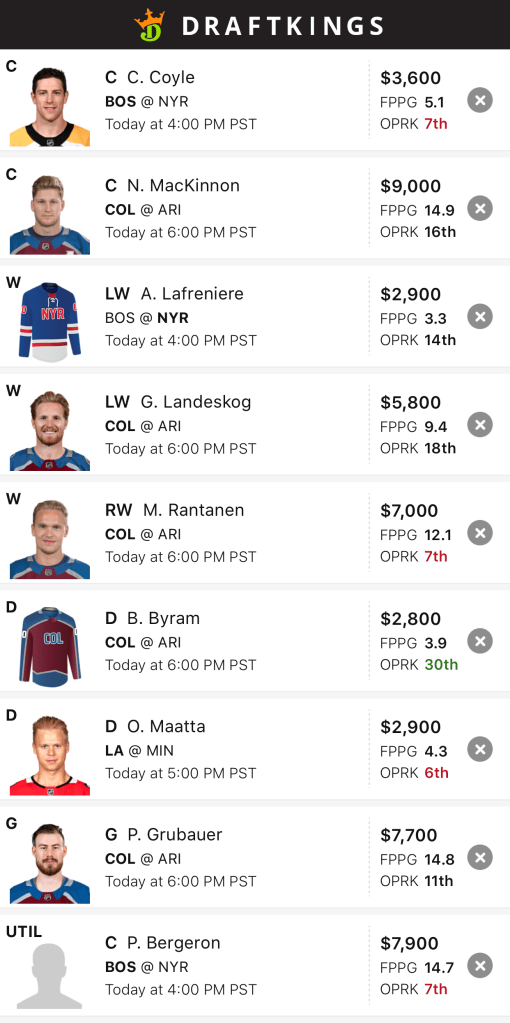
UPDATE: Grubauer is sitting tonight, so you can fairly comfortably pivot to Hunter Miska or, if you’re feeling a little more bold, one of the Kings goalies, whichever starts.
Today is a small game slate, which removes a little hit of variety in terms of your punting options. It also heightens the importance of not screwing up your goalie choice, and the best option today is probably Grubauer. If you believe in the fallacy of “due,” the Avalanche certainly are – hence the choice of their line here.
I’m avoiding the Kings except to punt with Maatta on defense as Doughty’s partner. It figures to be low scoring which might make Quick an attractive play but his stats actually look better than his play recently. If the Kings start Cal Peterson instead, you can start him with confidence and maybe upgrade a punt.
Of the punts available to you, the Rangers’ Lafrenierre is attractive on price point, power play time, and his opponent just leaked seven goals to the Islanders.
Enjoy!
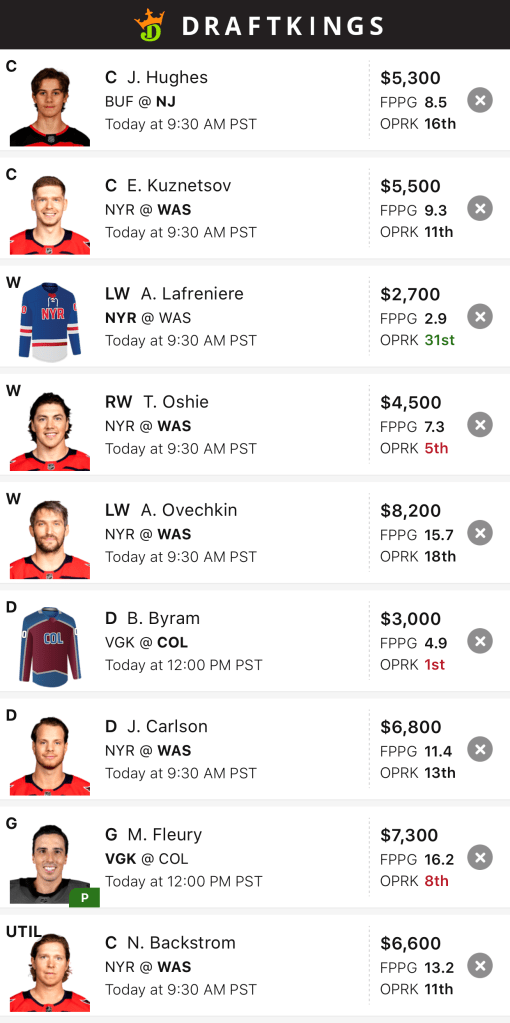
I hate this slate of matchups. But I’ve been on a heater so why not play them anyway. The Capitals seem a bit underpriced in what could be a blowout against the Rangers. The Avalanche and Golden Knights are playing outdoors which could make for crappy ice and a low scoring affair, leaving Marc-Andre Fleury as a potential bargain in goal. That’s all I have for analysis. Enjoy.
After their dismal qualifying performance for the 2018 World Cup, resulting in them missing the tournament for the first time in decades, confidence in the U.S. Men’s National Soccer Team was at an all-time low. The team’s on-field play was disjointed, they were dismally coached by Jurgen Klinsmann and Bruce Arena, and little hope sprung on the horizon. A few years later on, oh how much has changed. A string of positive performances under current coach Greg Berhalter, along with a flood of talented players making names for themselves in Europe and across the world has optimism once again coursing through U.S. soccer fans’ veins.
Recent friendlies have seen many players snag their first caps, and has thrown fuel on the fire of one soccer’s most fun guessing games: who are going to be the 23?
Well, some answers to this question are obvious. Everyone knows who Christian Pulisic is, the talismanic attacking midfielder currently kicking ass and taking names for Chelsea. Other young stars on the rise like Konrad De La Fuente, Sergino Dest, Josh Sargent, Weston McKinnie, and others are rapidly becoming household names.
But what if Berhalter wanted to really plumb the depths of the talent mine to round out the back end of the roster? He would probably schedule a friendly to audition a bunch of heretofore unknown players for those spots, wouldn’t he? Well, if WE were Berhalter, it’s what WE would do.
Here’s how that lineup might look.
Goalkeeper: Divine Imasuen
The United States has rarely been hurting for goalkeeping talent, which makes it weird that they kept running out Brad Guzan for so many games after the over overrated Tim Howard era. That being neither here nor there, the U.S. maintains a healthy stable of good goalkeepers, including but not limited to guys like Zach Steffen and Ethan Horvath. But if they ever wanted a, uh, intervention at the position, they might go with Divine Imasuen. The 19-year-old is currently contracted to Tennis Borussia in the German Regionalliga, which is somewhere between the 4th and 16th tier of German soccer. I’d say he was plying his trade, but it doesn’t look like he’s gotten on the field yet. Competition must be stiff up there in Tennis, wherever the hell that is.
Defender: Jonathan Campbell
Jonathan Campbell. He even sounds like a defender, right? John Brooks. Timothy Chandler. Jonathan Campbell. Would you even ask the question? Campbell is a veteran of sorts at age 29. Deep MLS fans may even remember the time he spent with the Chicago Fire from 2016 to 2018, and his cup of coffee in 2019 with the Seattle Sounders. Campbell supposedly announced his retirement in May of last year, but joke’s on you morons. The interwebs tell me he’s currently lacing them up for Svay Rieng in the Cambodian C-League. If my wild dreams of a Jonathan Campbell Disney movie-type late rise to stardom have any chance of becoming reality, I really hope there’s not a Cambodian A or B-League…
Defender: Rayan Holland
No, that’s not a typo, presumptuous grammar snob. You think I don’t know how to spell Ryan? That isn’t even this guy’s name. Anyway, Holland. He was born in England, but for some reason that I assume involves at least one of his parents, he has U.S. National Team eligibility. And a good thing he does, because if his recent performance for Kettering Town of the English National League (a mere four tiers below the Premiership) are any indicator, a call-up could happen at any moment. I may or may not have made some assumptions about those performances, because it’s impossible to find any information on his play, but come on. Rayan Holland! What a name!
Defender: Tom Tom Johnson
If you’re wondering why Johnson’s first name is Tom Tom instead of just Tom, or Thomas, or Tommy, so am I. Imagine being a 25-year-old from New Jersey, and having to introduce yourself with a name that sounds like something your grandma puts in your birthday card accompanying the wool sweater she knit you. Well, grandma can be proud of lil’ Tom Tom because he’s representing Rincon in the Spanish Autonomicas Division. I don’t know anything about Rincon, or Autonomicas for that matter, except that it’s below the Tercera Division, which my high school Spanish gives me reasonable confidence in asserting it’s well below the Primera Division as well.
Defender: Leo Krupnik
This is funny because Krupnik is old enough to have been born in the Soviet freaking Union!!! At 41, he’s still younger than me but whatever. While I can’t find any statistics on him after 2015, he’s still apparently somehow with Maccabi Umm Al Fahm in the Israeli Liga Bet. If the name sounds familiar to you, it’s because Krupnik actually had a fairly long, if a bit undistinguished, career in pro soccer, including a brief stint with the New York Red Bulls in 2009. And if you think 41 is too old to have a shot at making your international debut, well then you’ve clearly never seen Dennis Quaid in The Rookie. Jimmy Morris may have been about 36 when he cracked the big leagues with the Devil Rays, but Quaid was at least 60 when he played the part.
Midfielder: Mukwelle Akale
I had a whole litany of funny things to write about Akale, who is from Minneapolis and currently patrols the wing for Pafos in the Cypriot first division. That means it’s in Cyprus, you uncultured cretin. Turns out, I’m the dingus and the joke is on me. If Akale ever did get that call up to the senior team, it would only be his first time representing the senior team. That’s right. Akale has represented the U.S. at the U-17, U-18, and U-20 levels. *throws jokes into trash can*
Midfielder: Nehemia Perry
Perry is a 27-year-old of Jamaican descent but American eligibility who patrols the midfield for St. Andrews. No, not that St. Andrews. Not the other St. Andrews either. This St. Andrews is in the Maltese Challenge League. This is noteworthy because I was today years old when I found out that the Malta has multiple tiers of professional soccer. The Challenge League is not in the top one. To be fair to Perry, the limited statistical availability for Maltese lower league soccer still confirms he’s logged a few minutes for the team, even smashing home a goal. And can you say that you have scored a goal in professional soccer? Yeah, I didn’t think so, so shut up.
Midfielder: Athanasios Scheidt
In case you wondered, Scheidt’s name is pronounced shite. I know this, because I understand the basics of enunciation, and in the off chance I’m wrong, it means that God hates us and we’re all doomed anyway. Scheidt was born in Germany but apparently has at least one American parent, which passes the sniff test because we’re known as a country in which parents name their kids some pretty weird ass shite. See what I did there? Your new favorite player with the name Athanasios earns that distinction over all the other Athanasiosi by playing for Radomiak Radom in Polish I Liga. Or maybe it’s the 1 Liga? Who the hell knows, but it’s not the Ekstraklasa, which is evidently the top tier in Polish soccer.
Midfielder: Ben Sippola
Remember this guy? No you don’t, you damn liar. I mean, sure, there’s an off-chance you were a die-hard Columbus Crew supporter circa 2011, and knew his name from the occasional appearance on the substitutes bench. But let’s just be honest with one another. You weren’t a Crew fan in 2011, you’ll never be a Crew fan, and I had a third thing I wanted to say here but my train of thought got derailed. The 33-year-old Sippola currently is on the roster of Torslanda in the fourth tier of Swedish soccer. I can’t find any stats for him after 2013 so he might just be a coach. But it’s more fun to think of him out there whipping crosses and snapping fibulas in sub zero temperatures.
Forward: Arda Bulut
Bulut currently smashes goals into the back of the net for Karacabey Belediyespor in the Turkish second division. Yes, I absolutely copy and pasted that team name, because the chances of me typing that out without a typo that changed it’s meaning to goat humper or something embarrassing was close to zero. Also, Bulut has really only smashed in one goal. In 70 career minutes. Wipe that smirk off your face. It’s one more goal than you’ve scored.
Forward: Dion Acoff
Listen, man. You can’t go out there and bag goals for an Icelandic powerhouse like Throttur Reykjavik without being a badass on the pitch. Or maybe you can. Maybe you just have to be kinda good at soccer. And Acoff might be, because the 29-year-old from Fontana, California sees semi-regular playing time with Iceland’s biggest soccer club and has netted 16 career goals for them.
Substitutes Bench
Goalkeeper: Brian Schwake
The 19-year-old Schwake still has his whole career in front of him. If he doesn’t suck, it could be a long one. He does, however, play for Linlithgow Rose in Scotland. Heard of them? If not, that’s because they play in the Scotland Feeder Leagues. I don’t know what a Feeder League is, but it’s likely several levels below the Premiership, which is home to storied clubs like Rangers, Celtic, Dundee United, Hibernian and others.
Defender: Stephen Payne
Shaun accused me of writing too many homer articles. And while he’s right about that, I’m passive aggressively clapping back by including as many Southern California guys as I can. Payne was born in Riverside, which I just now noticed could just as easily be in Nigeria as it could in California, but whatever. He’s logging full-time minutes for Vilaverdense in the Portuguese Campeonato de Portugal Prio. That’s a few levels below iconic clubs such as Benfica, but hey, how many minutes are you logging in pro soccer? In Portugal? Where smoking hot women basically grow on trees? Exactly.
Midfielder: Faris Abdi
Hey look, another Southern California kid! Abdi is 21 years old, which low key sucks ass for him because he plays for Al Quadisiya in Saudi Arabia, and rumor has it if you drink alcohol there they lop off body parts. Abdi started his career in 2019 with Austin Bold in the U.S., and while I can surmise little more about them apart from being in Texas, my feeling is he shoulda stayed there. Dude could be getting druuuuuuuuuuuuunk right now.
Midfielder: Lee Nguyen
Remember this guy? This time I believe you. Why? Because Nguyen has logged more than 20,000 minutes of MLS soccer in his career. Those days are behind him as he currently plays for Ho Chi Minh City in Viet Nam. Fun fact, in the off chance that Nguyen did somehow get a call up to the National Team at age 33, it wouldn’t be the first time he did. From 2007 to 2016 he was capped by the U.S. nine times. In his prime, he was a heck of a player.
Forward: Maki Tall
Standing at 173cm, Tall is anything but. I’m clearly running out of jokes and I also don’t have any idea how many feet and inches that translates to. I only know my German parents used to say, roughly translated, “that guy is nearly two meters tall,” to anyone over six feet. 173cm is not two meters. At least it freaking better not be, otherwise I’ll throw my laptop in my non-existent swimming pool and go to bed. Tall is 25, was born in Washington D.C., and plays for Francs Borains in Belgium. They’re an amateur team, which I assume means they’re in a tier well below teams that are…well, in a professional league.
I hope you’ve enjoyed this article. I would remiss if I didn’t credit Soccerway.com here. Without that amazing website and its innumerable soccer rabbit holes to jump down, it would have taken me years to write this article, and I’ve have damn quit after 45 minutes.
Yes, just another armchair GM wondering what a guy who gets paid to do the job is thinking. This column isn’t meant to impugn the job Rob Blake has done as Kings GM. The team is almost universally regarded to have the best prospect pool in NHL, so he’s quite obviously done a remarkable job in accumulating talent. One could argue he waiting too long before conceding the team was in need of an overhaul, and flipping dependable veterans like Alec Martinez, Jake Muzzin and Tyler Toffoli for young assets and draft picks. But all in all, if your team is number 1 in something like prospect quality, you get to take credit for that.
In the title, I say they’re ready to compete. This isn’t to imply they’re some kind of Stanley Cup favorite or anything, but they’ve shown me enough in a limited sample size, despite a brutal schedule and significant injuries to multiple key players, that they could be very much in play for a postseason spot in a very competitive Western Conference. Stars like Anze Kopitar and Drew Doughty are playing as well as they ever have. Sean Walker and Matt Roy have emerged as two of the NHL’s best young defensemen. One-time captain Dustin Brown is aging like wine in an age when most NHL players age like bread. Cal Peterson is in the process of wresting the starting goalie job away from multiple time Stanley Cup hero, Jonathan Quick. There are a lot of reasons to be excited.
Oh, there are flaws. For one, they’re not deep. We saw how badly their defense sagged after Walker and Roy suffered injuries in the same game – Walker taking an errant slapshot to the eye, Roy on the receiving end of a brutal cheap shot into the boards by Minnesota’s Kevin Fiala. They’ve also got a few too many place holders keeping seats warm for whenever the prospects get called up. There’s nothing wrong with guys like Trevor Moore, Blake Lizotte, Michael Amadio et al as human beings, and they probably deserve to be employed in the NHL, but no team with designs on contending is giving them significant ice time. And there’s of course the big one, which has been the big one for several seasons now. The “experts” will tell you it’s secondary scoring. Secondary scoring is just a fancy way of saying…well, scoring. Funny thing about ice hockey, it’s a difficult sport to win games in if you don’t have guys who can smash the puck into the net with some kind of frequency. Kopitar is a likely Hall of Famer, and one of the best two-way players of this generation, but has always been a pass first guy. He’s on the top line with Brown and Alex Iafallo. Brown leads the team in goals to date with seven, but is unlikely to sustain that pace considering his last (and only) 30-goal season was thirteen years ago. Iafallo is a nice player with terrific CORSI and ‘goals for percentage’ numbers, but has never broken the 20-goal threshold. The only name hockey casuals will recognize from the second line is Jeff Carter, who is well past his prime as a goal scorer, but still a tremendous defensive forward and elite penalty killer. So where are the goals going to come from?
That deep prospect pool, right? Well… here’s the thing. None of the Kings’ top prospects are that Alex Ovechkin type scorer. I mean, Ovechkin is a unicorn and one of the greatest to ever play, so maybe his standard is unreachable. But there’s no Leon Draisaitl. No Alex DeBrincaat. No David Pastrnak. No Sebastian Aho. Name whomever you want.
Top prospect Quinton Byfield profiles more as a Kopitar type, and while that’s nothing to shake a stick at, it’s not an elite goal scorer. Alex Turcotte is a relentless energy guy and plays both ends of the ice, but again, not an elite scorer. Arthur Kaliyef has the talent profile to potentially develop as a goal scorer, but persistent concerns about his work ethic make reaching his ceiling prohibitively unlikely. The other guys: Gabe Vilardi, Samuel Fagemo, Rasmus Kupari, Carl Grundstrom, Jared Anderson-Dolan and a handful of others all project to be quality second and third line player – a tremendously valuable collection of assets there – but again… no elite scorer.
It’s hard to find an top end goal scorer. There’s maybe one Auston Matthews, or Nathan MacKinnon, or Patrick Kane to draft every year or two.
That’s what makes the Kings disinterest in grabbing one this season all the more perplexing. It’s the consensus missing piece to the contention puzzle. But when the salary cap troubled Vegas Golden Knights made Max Pacioretty available during the off-season, the Kings weren’t interested despite having the most available cap space in the league. When Winnipeg’s disgruntled sniper Patrick Laine became available early in the season, the Kings once again demurred, and Laine was ultimately flipped for fellow disgruntled stud Pierre-Luc Dubois and Jack Roslovic. Even when Alex Galchenyuk, a former third overall pick whose production never quite lived up to his immense talent, was essentially free to a good home with zero long term commitment, nothing.
Where are the goals going to come from, if not grown on trees?
Back to the current squad, all the Kings’ best players are north of 30. Kopitar? The 14-year veteran is now 33. Doughty? The 9-time all star is 31, having averaged an absurd 26 minutes plus of ice time over his career. Brown and Carter are both 36. If they wait too long to make another charge at a title with their current veteran core, they’ll have to replace them too.
It’s a frustrating and peculiar complacency being shown by the organization. It’s one that poses the question, what is it exactly that they are waiting for?
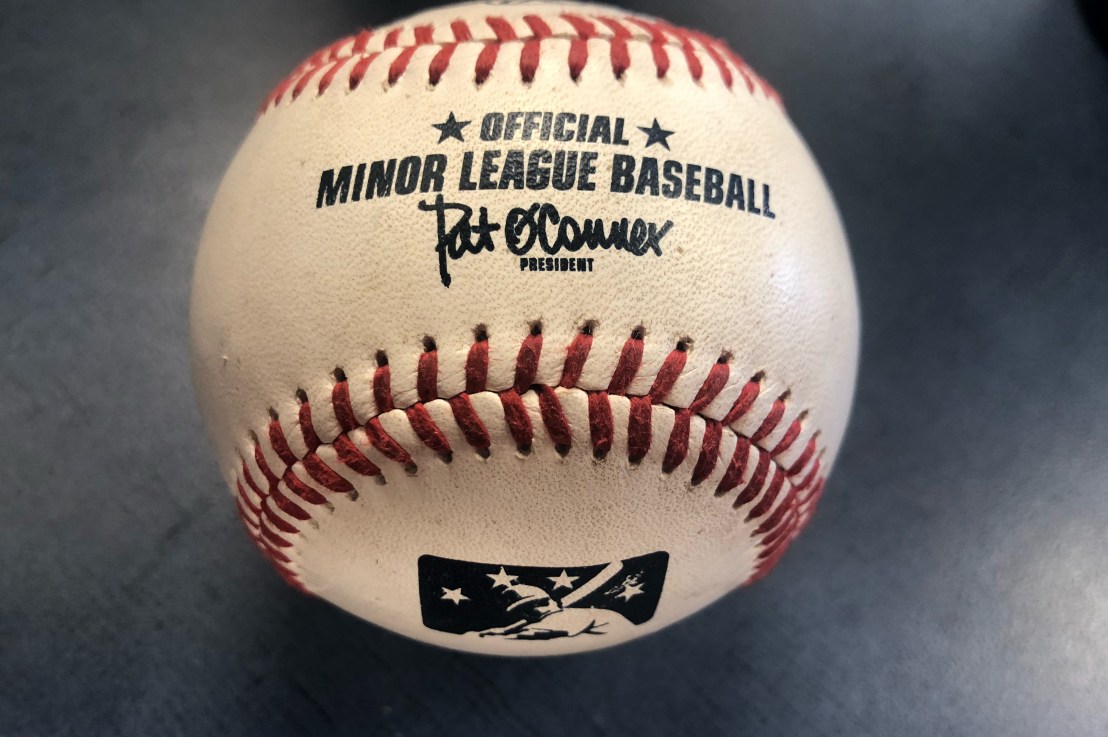
Major League Baseball sent out a press release on Friday, February 12 announcing all 120 Minor League Baseball teams, their affiliations, and highlighting some features of the agreement. All 120 teams have agreed to 10-year deals, meaning there will not be the every-other year shuffle of affiliates so fans really start following a given team’s system that plays in their town for the next decade. Every team that was extended an invitation to be among the affiliated clubs accepted, with the only one that did leave some doubt being the Fresno Grizzlies as they dropped from Triple-A all the way down to Low-A.
Much has been made of the less than creative league names, but that is sure to change sooner than later, and there is plenty of question about how the 2021 season will look given the ongoing pandemic, but what about the long-term implications of the deal? Let’s dive into the good, the bad, the misleading, and some wish list items that has come out of the deal.
Good
10-year deal: This is big, the mass shuffle of affiliates is now a thing of the past and the clubs can truly market themselves as an extension of the big-league club they are affiliated with. No longer will we see a team like the Lancaster Jethawks (more on them in the bad) who were affiliated with five different big-league clubs in their 24 seasons.
Low-A Warm Weather: This one is easy to overlook, but the swapping of progression for most teams at the A ball level makes much more sense now compared to the past. No longer will we see players make their full season debut, in April, in Ohio or Michigan, or Wisconsin, instead they will be in Florida, California, or the Carolinas. It may not seem like much, but there is enough of an adjustment for a high school draftee transitioning into pro ball without many having to pitch in near freezing temps for the first time.
Bad
42 Cities Removed: There are now 43 cities across the county that used to have an affiliated minor league club that don’t anymore. This means states like Colorado go from having multiple minor league teams to none, while states like Montana have no affiliated baseball of any kind in their state any longer. True, many have turned into summer collegiate leagues or independent teams, but a place like Lancaster, California lost their 25th season to the pandemic and currently sit with no immediate plans to host a baseball team any longer.
Shortened Draft: The draft has been shortened from 40 rounds to 20. This is not a massive issue since the great majority of big-league ballplayers are either international signings or were drafted in the top five rounds, but it cuts the number of players who get to call themselves pros in half.
Misleading
Salary Increases: In the release, the first bullet point of the “many improvements” is a 38-72% increase in player salaries. This was much needed but is also highlights just how bad player salaries were. JJ Cooper of Baseball America helped crunch the numbers and Rookie level salaries (yes, there is still Rookie ball, but complex only) went from $290/week to $400/week. Both levels of A ball went from $290/week up to $500/week (the biggest jump of any level), while Double-A now gets paid $600/week compared to $350/week and Triple-A jumps to $700/week from the old rate of $502/week. Players only get paid during the season, so 6 months of A ball means a player makes roughly $13,500/year while Triple-A players make $18,200. Compare that to the Triple-A player who is on a big-league deal with a minimum wage of $570,500, which would be $21,942.331/week if paid out over the same time frame. This means one player could make more in a single week than another makes for an entire season.
Better Geographical Alignment: The release points out that, on average, Triple-A clubs are more than 200 miles closer to their MLB affiliate than previous seasons. For the most part this is an improvement, but there are still some outliers that stick out like a sore thumb. The Colorado Rockies Triple-A affiliate is still down in Albuquerque, New Mexico but their Double-A affiliate remains all the way out in Hartford, Connecticut. Then there is the High-A East which has five teams in the North Division and seven in the South Division that will include bus rides from Brooklyn, New York down to Rome, Georgia and back. Sure, scheduling will likely have those teams make stops at other clubs along the way, but that doesn’t exactly scream “better geographical alignment”.
Modernized Facilities: Part of the agreements between the Minor League and Major League teams included requirements for improvements, modernization, and general upgrades for fans, players, and staff alike. At first glance this doesn’t seem like it could be anything but a good, but let’s take a look at why so many ballparks need improvements. The old California league teams, now mostly consisting of the Low-A West division, saw Bakersfield and High Desert run to the Carolina League back in 2016. The remaining teams didn’t have commitments for more than a handful of years, makes it tough to commit to sinking millions into ballpark improvements. Then there is the Rocky Mountain Vibes, formerly the Colorado Springs Sky Sox, who saw their Triple-A team move to Amarillo only to be replaced by a short-season club, then be eliminated from affiliated ball all together. It is no surprise, with all those moving parts and without a long-term commitment, the owners of the ballpark didn’t dig up right field and insert better irrigation at a field that would rain out with the sun shining because water would merely pool in the outfield rather than drain.
Wish List
MiLB TV Everywhere: Now that MLB has taken over operations of MiLB and there are long term commitments, there is no reason every club shouldn’t have their own broadcast team. This would take some time, but part of the modernization of the ballparks should come with the addition of camera wells and a broadcast booth ready for TV. MLB Network could then pick a Game of the Week to air mid-week, mid-day to fill programing but also allow fans to see the stars of the future and highlight great minor league cities.
Televise the Draft League: The Draft League, an amateur summer league run by MLB in conjunction with Prep Baseball Report, still has many questions looming, and it is not technically MiLB affiliated, but should have its own broadcasting package included in MiLB.tv.
Conference/Division Naming Contests: One of the many fun aspects of Minor League Baseball is the naming rights contests for teams when they move or re-brand that sees fans submitting crazy names and voting on them to determine what the team’s moniker will be moving forward (see Rocket City Trash Pandas). Why not take a big negative out of the announcement (uninspired league/conference/division names) and turn it into a positive by opening it up to a fan vote?
Allow Loans: Ok, this may be a wild idea on the surface, but stay with me. Under the new schedule of a July draft, teams will likely negotiate future contracts (i.e., drafted in 2021 but the contract begins in 2022), so why not allow teams that make up the Indy ball circuit loan those college draftees? This allows teams to sign a player to a same year contract, reducing the negotiation struggles sure to come with agents and teams arguing over when the contract begins, and let Indy teams bid to pay the player’s salary that summer in exchange for them suiting up for those teams. This wouldn’t work for top of the draft guys, and high school picks will likely head to the complex leagues but sending the 15th round college senior to the Missoula PaddleHeads helps strengthen the relationship with “partner leagues”.
The next twelve months will be fascinating to watch the minor league landscape settle in, but there are opportunities for Major League Baseball to better the game at the lower levels, and a season with so many moving parts as the 2021 season has is the perfect time to give it a shot.
The narrative around the NFL is that Rams changed how head coaching hires were being looked at when they brought on McVay in that role in 2017. And to a large degree, it’s true, for good reason. After years of sub-mediocrity for the very sub-mediocre Jeff Fisher, McVay led the team to the playoffs in his first season, and a Super Bowl berth in his second, riding the strength of an innovative, arguably league best offense.
Suddenly, in a league where the old white guy coach was the enduring tradition, it wasn’t crazy to hire a 30-year-old to lead the team. Suddenly, more people were doing it. In fact, teams were going after guys on McVay’s staff. It made sense in 2017 and especially 2018. Matt LaFleur and Zac Taylor took head coaching positions, and are doing well – even Taylor who got off to a shaky start in Cincinnati, seemed to have gotten things moving in the right direction before Joe Burrow’s unfortunate and very serious injury. This year of course, it’s Brandon Staley who masterminded the league’s best defense before accepting the Chargers’ head coaching position vacated by Anthony Lynn.
But in this article, we aren’t talking about the moves that make sense. Of course, given the opportunity, 99% of coordinator level coaches will accept that bump up in stature and pay that comes with being a head coach. We’re also not talking about removing incompetent guys like John Bonamego from positions they never should have had to begin with.
We’re talking about the lateral moves.
Liam Coen heading back to the college ranks. Andy Dickerson heading up to Seattle, joining the also departed Shane Waldron (who to be fair got a coordinator position out of his move). It’s highly regarded cornerback coach Aubrey Pleasant leaving a top rated defense with all world corner Jalen Ramsey for roughly the same position in Detroit where they have… let’s just say not all world corners and are a long way removed from any kind of contention. It’s Joe Barry, following Staley to San Diego for roughly the same position he had with the Rams. It’s the popular John Fassel leaving after last season for the same position with the Cowboys.
The media paints a picture that McVay is simply so good at developing coaches that other teams just have to have them… but is that really the case? Why would guys leave a job on a good team in Los freaking Angeles for the same job on a worse team in a city with worse weather, San Diego notwithstanding?
Why won’t anyone ask if the reality is that McVay is just miserable to work for?
Here’s the thing. NFL head coaches are not known for their modesty. Bill Belichick is one of the most successful coaches in NFL history, had well below average turnover on his staff, and is insufferably arrogant. Any head coach who has experienced success to any degree in the NFL is going to have an inflated sense of self-importance.
So this has nothing to do with McVay’s massive ego, which understates actually how big it truly is. It has nothing to do with his smarmy and disingenuous attitude towards the media. Take his name out of that description and it still fits any of 20 or more head coaches.
What if it’s that he’s a control freak? What if it’s his stubborn insistence on continuing to call the plays on offense, despite not being any good at it. And before you say, “Whoa, wait a minute, remember when they were unstoppable and yada yada yada and this and that and Todd Gurley and,” yeah, I do remember. You had massive talent on that squad, and McVay to his credit is a master schemer – a borderline savant-level genius at designing and philosophizing offensive concepts and strategies to flummox defenses and maximize his offensive unit’s potential for success.
But that doesn’t translate into his play calling. To be fair, it’s not always woefully inept. He should get a mulligan for the Super Bowl against the Patriots where he was pretty much a deer in headlights, and called plays for four quarters that were the equivalent of smashing your head against a brick wall. It was his first Super Bowl, he was going against the best coach in the game, and folded under the pressure. It could have happened to anyone.
What’s troubling is the next two seasons. The Rams missed the playoffs in 2019, plagued by squandered chances to defeat inferior teams. Then came 2020, a dramatic improvement on the defensive side of the ball, counteracting a precipitous drop in offensive efficiency. A predictable 17 week regular season sequence of telegraphed wide receiver screens and repetitive underneath routes blown up with regularity was obscured by a brilliant defense that limited opposing offenses to less than 19 points a game, and regularly created short fields with turnovers.
McVay showed either an alarming inability, or unwillingness to make adjustments, and respond to the adjustments made by opposing defenses to his offense. And yet, he continued to cling to the role of play calling, and for what?
Many blamed the deterioration of Jared Goff’s play at the quarterback position. It’s a fair analysis, based on the numbers, but is a chicken or an egg thing? Is it a decline in Goff’s ability that’s to blame, or is it a stubbornness by McVay to stick with poorly working game plans that put his quarterback in bad positions?
We will learn a lot in 2021. The Rams paid a King’s ransom (as they should have) to drastically upgrade the quarterback position with Matthew Stafford, and don’t project to lose much if any talent from offense. If despite this, and multiple years of lessons learned, the offense continues to be stuck in a rut, we will have our answer, won’t we? If after another missed, or early exit from the playoffs another five or six coaches leave in lateral moves, we’ll definitely have our answer.
I debated sitting today’s slate out. I hate the matchups but I did well the past couple days and, of course, forgot to post my lineups here.
Anyway, the two most exploitable matchups appear to be the Canadiens against a leaky Oilers defense, and the Jets against a Senators team that wouldn’t cut it in most rec leagues. Enjoy.
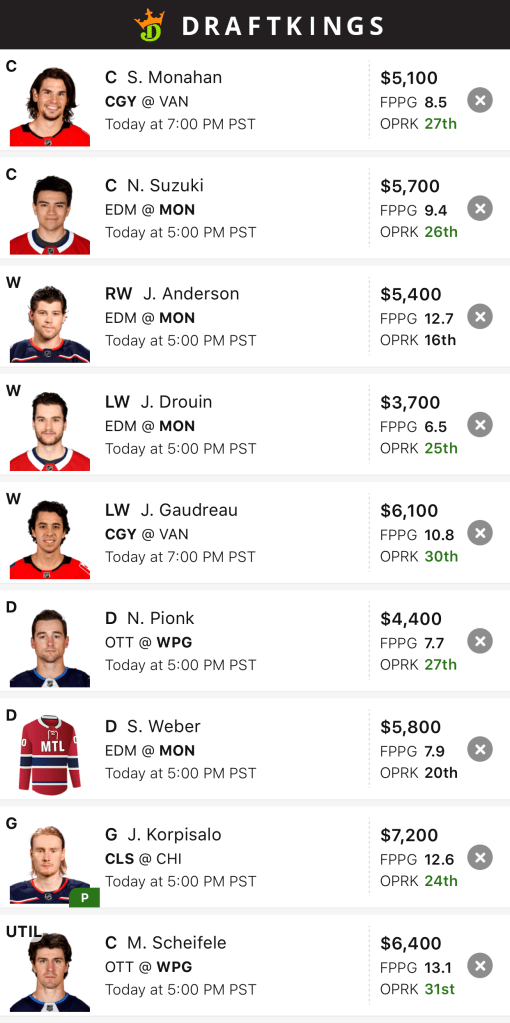
Tournament lineup
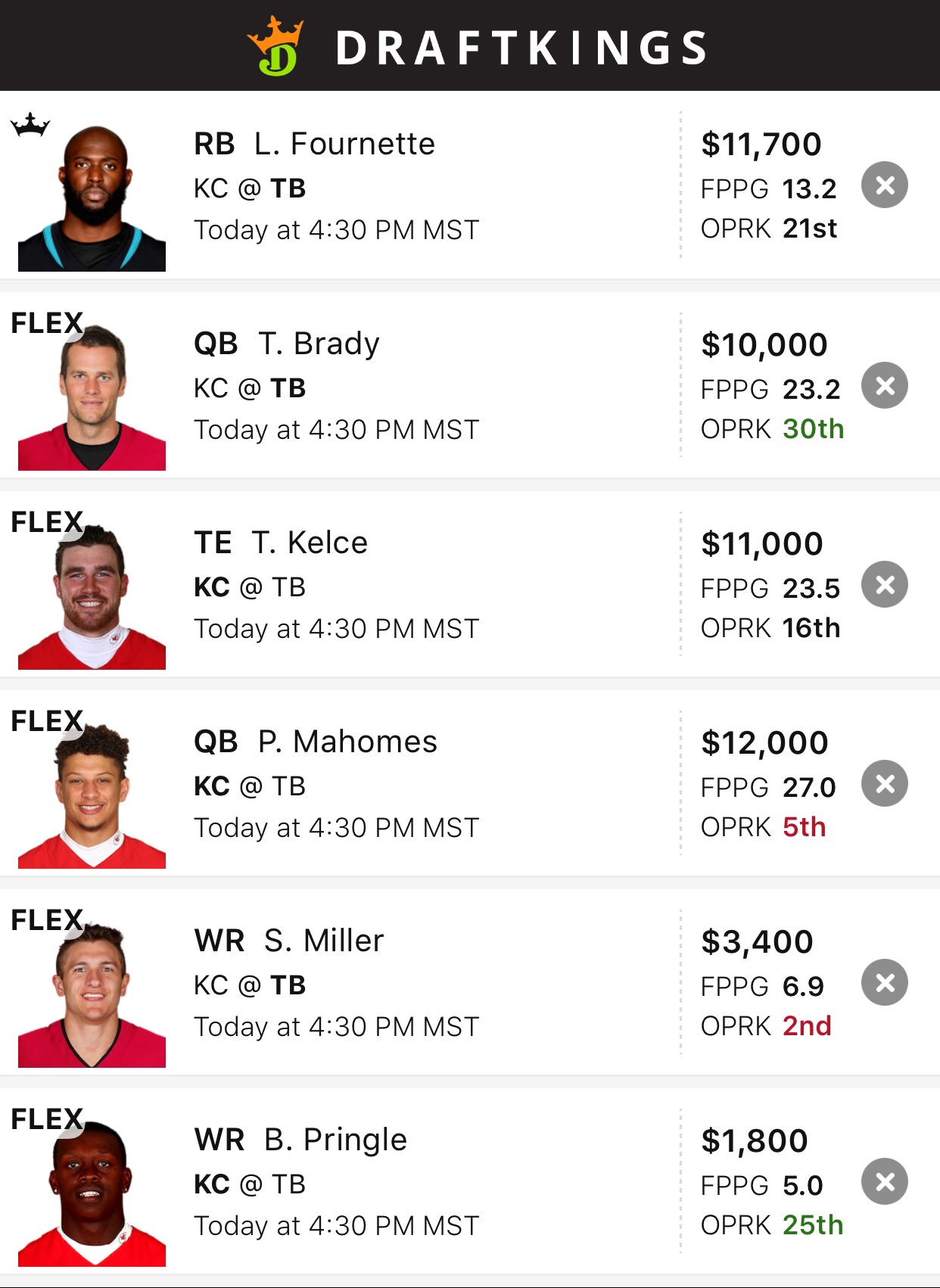
50/50 Lineup
 The Stain Sports