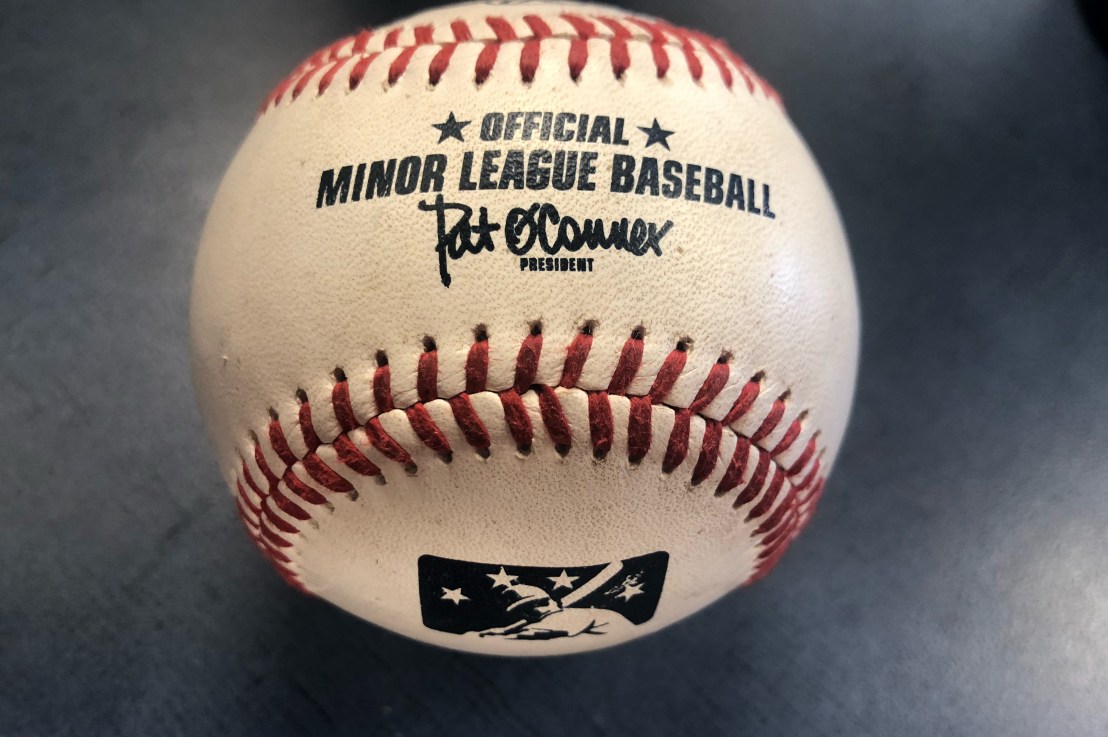
Reactions to the new MiLB/MLB Agreement

Reactions to the new MiLB/MLB Agreement

Major League Baseball sent out a press release on Friday, February 12 announcing all 120 Minor League Baseball teams, their affiliations, and highlighting some features of the agreement. All 120 teams have agreed to 10-year deals, meaning there will not be the every-other year shuffle of affiliates so fans really start following a given team’s system that plays in their town for the next decade. Every team that was extended an invitation to be among the affiliated clubs accepted, with the only one that did leave some doubt being the Fresno Grizzlies as they dropped from Triple-A all the way down to Low-A.

Much has been made of the less than creative league names, but that is sure to change sooner than later, and there is plenty of question about how the 2021 season will look given the ongoing pandemic, but what about the long-term implications of the deal? Let’s dive into the good, the bad, the misleading, and some wish list items that has come out of the deal.

Good

10-year deal: This is big, the mass shuffle of affiliates is now a thing of the past and the clubs can truly market themselves as an extension of the big-league club they are affiliated with. No longer will we see a team like the Lancaster Jethawks (more on them in the bad) who were affiliated with five different big-league clubs in their 24 seasons.

Low-A Warm Weather: This one is easy to overlook, but the swapping of progression for most teams at the A ball level makes much more sense now compared to the past. No longer will we see players make their full season debut, in April, in Ohio or Michigan, or Wisconsin, instead they will be in Florida, California, or the Carolinas. It may not seem like much, but there is enough of an adjustment for a high school draftee transitioning into pro ball without many having to pitch in near freezing temps for the first time.

Bad

42 Cities Removed: There are now 43 cities across the county that used to have an affiliated minor league club that don’t anymore. This means states like Colorado go from having multiple minor league teams to none, while states like Montana have no affiliated baseball of any kind in their state any longer. True, many have turned into summer collegiate leagues or independent teams, but a place like Lancaster, California lost their 25th season to the pandemic and currently sit with no immediate plans to host a baseball team any longer.

Shortened Draft: The draft has been shortened from 40 rounds to 20. This is not a massive issue since the great majority of big-league ballplayers are either international signings or were drafted in the top five rounds, but it cuts the number of players who get to call themselves pros in half.

Misleading

Salary Increases: In the release, the first bullet point of the “many improvements” is a 38-72% increase in player salaries. This was much needed but is also highlights just how bad player salaries were. JJ Cooper of Baseball America helped crunch the numbers and Rookie level salaries (yes, there is still Rookie ball, but complex only) went from $290/week to $400/week. Both levels of A ball went from $290/week up to $500/week (the biggest jump of any level), while Double-A now gets paid $600/week compared to $350/week and Triple-A jumps to $700/week from the old rate of $502/week. Players only get paid during the season, so 6 months of A ball means a player makes roughly $13,500/year while Triple-A players make $18,200. Compare that to the Triple-A player who is on a big-league deal with a minimum wage of $570,500, which would be $21,942.331/week if paid out over the same time frame. This means one player could make more in a single week than another makes for an entire season.

Better Geographical Alignment: The release points out that, on average, Triple-A clubs are more than 200 miles closer to their MLB affiliate than previous seasons. For the most part this is an improvement, but there are still some outliers that stick out like a sore thumb. The Colorado Rockies Triple-A affiliate is still down in Albuquerque, New Mexico but their Double-A affiliate remains all the way out in Hartford, Connecticut. Then there is the High-A East which has five teams in the North Division and seven in the South Division that will include bus rides from Brooklyn, New York down to Rome, Georgia and back. Sure, scheduling will likely have those teams make stops at other clubs along the way, but that doesn’t exactly scream “better geographical alignment”.

Modernized Facilities: Part of the agreements between the Minor League and Major League teams included requirements for improvements, modernization, and general upgrades for fans, players, and staff alike. At first glance this doesn’t seem like it could be anything but a good, but let’s take a look at why so many ballparks need improvements. The old California league teams, now mostly consisting of the Low-A West division, saw Bakersfield and High Desert run to the Carolina League back in 2016. The remaining teams didn’t have commitments for more than a handful of years, makes it tough to commit to sinking millions into ballpark improvements. Then there is the Rocky Mountain Vibes, formerly the Colorado Springs Sky Sox, who saw their Triple-A team move to Amarillo only to be replaced by a short-season club, then be eliminated from affiliated ball all together. It is no surprise, with all those moving parts and without a long-term commitment, the owners of the ballpark didn’t dig up right field and insert better irrigation at a field that would rain out with the sun shining because water would merely pool in the outfield rather than drain.

Wish List

MiLB TV Everywhere: Now that MLB has taken over operations of MiLB and there are long term commitments, there is no reason every club shouldn’t have their own broadcast team. This would take some time, but part of the modernization of the ballparks should come with the addition of camera wells and a broadcast booth ready for TV. MLB Network could then pick a Game of the Week to air mid-week, mid-day to fill programing but also allow fans to see the stars of the future and highlight great minor league cities.

Televise the Draft League: The Draft League, an amateur summer league run by MLB in conjunction with Prep Baseball Report, still has many questions looming, and it is not technically MiLB affiliated, but should have its own broadcasting package included in MiLB.tv.

Conference/Division Naming Contests: One of the many fun aspects of Minor League Baseball is the naming rights contests for teams when they move or re-brand that sees fans submitting crazy names and voting on them to determine what the team’s moniker will be moving forward (see Rocket City Trash Pandas). Why not take a big negative out of the announcement (uninspired league/conference/division names) and turn it into a positive by opening it up to a fan vote?

Allow Loans: Ok, this may be a wild idea on the surface, but stay with me. Under the new schedule of a July draft, teams will likely negotiate future contracts (i.e., drafted in 2021 but the contract begins in 2022), so why not allow teams that make up the Indy ball circuit loan those college draftees? This allows teams to sign a player to a same year contract, reducing the negotiation struggles sure to come with agents and teams arguing over when the contract begins, and let Indy teams bid to pay the player’s salary that summer in exchange for them suiting up for those teams. This wouldn’t work for top of the draft guys, and high school picks will likely head to the complex leagues but sending the 15th round college senior to the Missoula PaddleHeads helps strengthen the relationship with “partner leagues”.

The next twelve months will be fascinating to watch the minor league landscape settle in, but there are opportunities for Major League Baseball to better the game at the lower levels, and a season with so many moving parts as the 2021 season has is the perfect time to give it a shot.
Why do Sean McVay’s Coaches Keep Leaving Him?

The narrative around the NFL is that Rams changed how head coaching hires were being looked at when they brought on McVay in that role in 2017. And to a large degree, it’s true, for good reason. After years of sub-mediocrity for the very sub-mediocre Jeff Fisher, McVay led the team to the playoffs in his first season, and a Super Bowl berth in his second, riding the strength of an innovative, arguably league best offense.

Suddenly, in a league where the old white guy coach was the enduring tradition, it wasn’t crazy to hire a 30-year-old to lead the team. Suddenly, more people were doing it. In fact, teams were going after guys on McVay’s staff. It made sense in 2017 and especially 2018. Matt LaFleur and Zac Taylor took head coaching positions, and are doing well – even Taylor who got off to a shaky start in Cincinnati, seemed to have gotten things moving in the right direction before Joe Burrow’s unfortunate and very serious injury. This year of course, it’s Brandon Staley who masterminded the league’s best defense before accepting the Chargers’ head coaching position vacated by Anthony Lynn.

But in this article, we aren’t talking about the moves that make sense. Of course, given the opportunity, 99% of coordinator level coaches will accept that bump up in stature and pay that comes with being a head coach. We’re also not talking about removing incompetent guys like John Bonamego from positions they never should have had to begin with.

We’re talking about the lateral moves.

Liam Coen heading back to the college ranks. Andy Dickerson heading up to Seattle, joining the also departed Shane Waldron (who to be fair got a coordinator position out of his move). It’s highly regarded cornerback coach Aubrey Pleasant leaving a top rated defense with all world corner Jalen Ramsey for roughly the same position in Detroit where they have… let’s just say not all world corners and are a long way removed from any kind of contention. It’s Joe Barry, following Staley to San Diego for roughly the same position he had with the Rams. It’s the popular John Fassel leaving after last season for the same position with the Cowboys.

The media paints a picture that McVay is simply so good at developing coaches that other teams just have to have them… but is that really the case? Why would guys leave a job on a good team in Los freaking Angeles for the same job on a worse team in a city with worse weather, San Diego notwithstanding?

Why won’t anyone ask if the reality is that McVay is just miserable to work for?

Here’s the thing. NFL head coaches are not known for their modesty. Bill Belichick is one of the most successful coaches in NFL history, had well below average turnover on his staff, and is insufferably arrogant. Any head coach who has experienced success to any degree in the NFL is going to have an inflated sense of self-importance.

So this has nothing to do with McVay’s massive ego, which understates actually how big it truly is. It has nothing to do with his smarmy and disingenuous attitude towards the media. Take his name out of that description and it still fits any of 20 or more head coaches.

What if it’s that he’s a control freak? What if it’s his stubborn insistence on continuing to call the plays on offense, despite not being any good at it. And before you say, “Whoa, wait a minute, remember when they were unstoppable and yada yada yada and this and that and Todd Gurley and,” yeah, I do remember. You had massive talent on that squad, and McVay to his credit is a master schemer – a borderline savant-level genius at designing and philosophizing offensive concepts and strategies to flummox defenses and maximize his offensive unit’s potential for success.

But that doesn’t translate into his play calling. To be fair, it’s not always woefully inept. He should get a mulligan for the Super Bowl against the Patriots where he was pretty much a deer in headlights, and called plays for four quarters that were the equivalent of smashing your head against a brick wall. It was his first Super Bowl, he was going against the best coach in the game, and folded under the pressure. It could have happened to anyone.

What’s troubling is the next two seasons. The Rams missed the playoffs in 2019, plagued by squandered chances to defeat inferior teams. Then came 2020, a dramatic improvement on the defensive side of the ball, counteracting a precipitous drop in offensive efficiency. A predictable 17 week regular season sequence of telegraphed wide receiver screens and repetitive underneath routes blown up with regularity was obscured by a brilliant defense that limited opposing offenses to less than 19 points a game, and regularly created short fields with turnovers.

McVay showed either an alarming inability, or unwillingness to make adjustments, and respond to the adjustments made by opposing defenses to his offense. And yet, he continued to cling to the role of play calling, and for what?

Many blamed the deterioration of Jared Goff’s play at the quarterback position. It’s a fair analysis, based on the numbers, but is a chicken or an egg thing? Is it a decline in Goff’s ability that’s to blame, or is it a stubbornness by McVay to stick with poorly working game plans that put his quarterback in bad positions?

We will learn a lot in 2021. The Rams paid a King’s ransom (as they should have) to drastically upgrade the quarterback position with Matthew Stafford, and don’t project to lose much if any talent from offense. If despite this, and multiple years of lessons learned, the offense continues to be stuck in a rut, we will have our answer, won’t we? If after another missed, or early exit from the playoffs another five or six coaches leave in lateral moves, we’ll definitely have our answer.

Super Bets!

Super Bets!

BetOddsShaun’s PickTorsten’s Pick
WinnerChiefs -117, Bucs -105BucsBucs
Over/UnderO56 -113, U56 -108UnderOver
Total Players to attempt a passOver 2.5 +165, Under 2.5 -215OverOver
Total Players with a receptionOver 15.5 +13.5, Under 15.5 -167UnderOver
Jersey number of first TD scorerOver 24.5 -121, Under 24.5 -103OverOver
Opening kickoff a touchbackYes -305, No +230YesYes
O or D lineman to score TDYes +800, No -2000YesNo 
A Safety to be scoredYes +800, No -1667NoNo 
Successful 2-pt conversionYes +230, No -305YesYes
First play from scrimmagePass -124, Run +100RunPass

2020 NBA Mock Draft

Rnd. Pick Team Player Pos. School / Country
1 1         Minnesota Timberwolves LaMelo Ball G Australia
1 2 Golden State Warriors James Wiseman C Memphis
1 3 Charlotte Hornets Anthony Edwards G Georgia
1 4 Chicago Bulls Obi Toppin  F Dayton
1 5 Cleveland Cavaliers Deni Avdija F Israel
1 6 Atlanta Hawks Isaac Okoro F Auburn
1 7 Detroit Pistons Tyrese Haliburton  G Iowa State
1 8 New York Knicks Killian Hayes G France
1 9 Washington Wizards Onyeka Okongwu C USC
1 10 Phoenix Suns Cole Anthony G North Carolina
1 11 San Antonio Spurs Saddiq Bey F Villanova
1 12 Sacramento Kings Precious Achiuwa F Memphis
1 13 New Orleans Pelicans Devin Vassel G Florida State
1 14 Boston Celtics  Tyrese Maxey G Kentucky
1 15 Orlando Magic Patrick Wiliams F Florida State
1 16 Houston Rockets  Kira Lewis G Alabama
1 17 Minnesota Timberwolves RJ Hampton G New Zealand
1 18 Dallas Mavericks Aaron Nesmith F Vanderbilt
1 19 Brooklyn Nets  Tyler Bey F Colorado
1 20 Miami Heat Aleksej Pokusevski F Greece
1 21 Philadelphia 76ers  Josh Green  G Arizona
1 22 Denver Nuggets Leandro Bolmaro G Argentina
1 23 Utah Jazz Tyrell Terry G Stanford
1 24 Milwaukee Bucks Tre Jones G Duke
1 25 Oklahoma City Thunder Theo Maledon G France
1 26 Boston Celtics Nico Mannion G Arizona
1 27 New York Knicks Malachi Flynn G San Diego State
1 28 Los Angeles Lakers Paul Reed F DePaul
1 29 Toronto Raptors Vernon Carey  C Duke
1 30 Boston Celtics Cassius Winston G Michigan State


MLB 2020 Season Projections

Baseball starts tonight and the playoff setup is still TBD. I have decided to put the seed number next to the division winners, then Wild Card spot 1-5 next to the potential Wild Card teams so you can see who makes it with standard 2 Wild Card scenarios, and who makes it based on the proposed 5 Wild Card scenario. With teams being separated by region in terms of schedule, it is worth noting I would consider the East to be the toughest, followed by the West, then the Central the easiest. In a traditional year, I would project the Pittsburgh Pirates to have the worst record in baseball, but the Central will allow them to win too many games to get the first pick in next year’s draft, so I project that to go to the Baltimore Orioles.


AL East

1)      Tampa Bay Rays (3 seed in playoffs)

2)      New York Yankees (1st Wild Card)

3)      Boston Red Sox (4th Wild Card)

4)      Toronto Blue Jays

5)      Baltimore Orioles

AL Central

1)      Cleveland Indians (1 seed in playoffs)

2)      Minnesota Twins (2nd Wild Card)

3)      Chicago White Sox (5th Wild Card)

4)      Kansas City Royals

5)      Detroit Tigers

AL West

1)      Houston Astros (2 seed in playoffs)

2)      Los Angeles Angels (3rd Wild Card)

3)      Oakland Athletics

4)      Seattle Mariners

5)      Texas Rangers

NL East

1)      Atlanta Braves (2 seed in playoffs)

2)      Washington Nationals (1st Wild Card)

3)      Philadelphia Phillies (2nd Wild Card)

4)      New York Mets (5th Wild Card)

5)      Miami Marlins

NL Central

1)      Cincinnati Reds (3 seed in playoffs)

2)      Milwaukee Brewers (4th Wild Card)

3)      Chicago Cubs

4)      St. Louis Cardinals

5)      Pittsburgh Pirates

NL West

1)      Los Angeles Dodgers (1 seed in playoffs)

2)      Arizona Diamondbacks (3rd Wild Card)

3)      San Diego Padres

4)      Colorado Rockies

5)      San Francisco Giants


World Series: Tampa Bay Rays over Los Angeles Dodgers